
Atlas Orthogonal and Upper Cervical Chiropractic: A Complete Guide
Written & medically reviewed by Dr. Michael St. Louis, D.C.
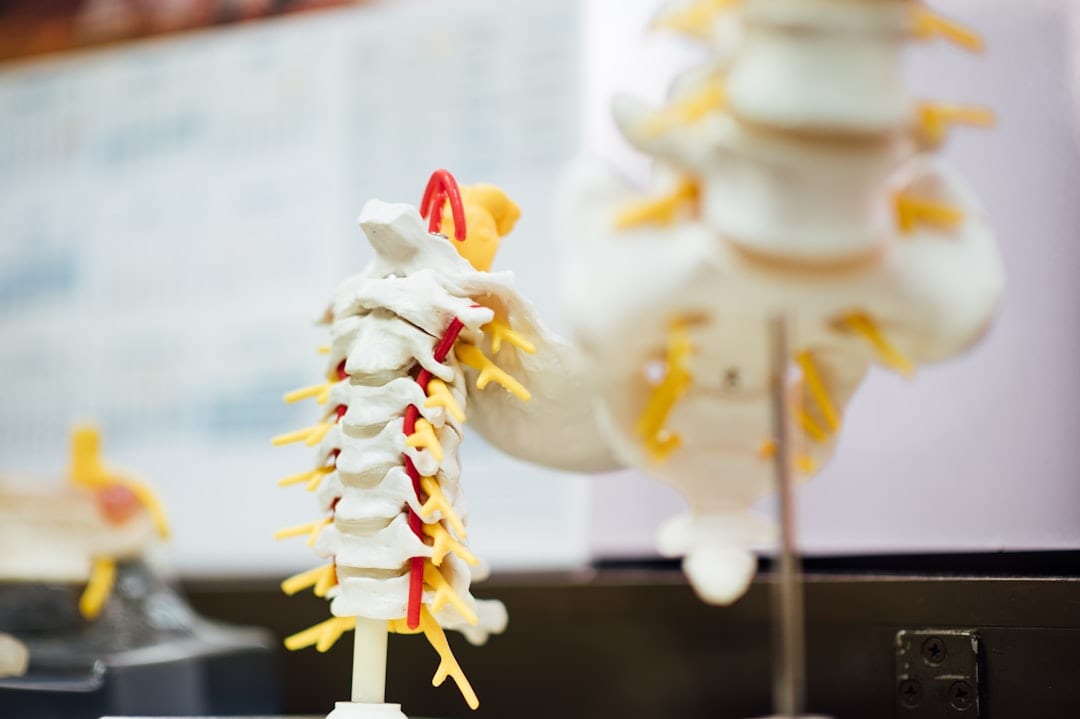
Atlas Orthogonal chiropractic is a highly specialized, instrument-based form of upper cervical care that focuses on correcting misalignment of the atlas — the first cervical vertebra (C1) — using precise, gentle adjustments that require no forceful twisting or cracking of the neck. When the atlas is properly aligned, the brainstem and entire spinal cord can function without mechanical interference, supporting the body's innate capacity to heal and regulate itself.
This article compares the two. If you want the service pages directly, upper cervical care is the discipline and Atlas Orthogonal is the specific technique we use within it.
Key Takeaways
- The atlas is foundational. The C1 vertebra sits at the base of the skull and directly surrounds the brainstem — even a small misalignment here can send ripple effects through the entire spine and nervous system.
- Atlas Orthogonal is a precision specialty. Practitioners use detailed X-ray analysis and a percussive instrument to deliver a correction measured in fractions of a millimeter, with no manual cracking or twisting.
- Upper cervical care addresses far more than neck pain. Conditions ranging from migraines and vertigo to sciatica, TMJ dysfunction, and concussion recovery have a documented neurological connection to the upper cervical spine.
- It is safe for most people. Because no forceful manipulation is used, Atlas Orthogonal is widely considered one of the gentlest chiropractic techniques available — including for post-surgical patients, older adults, and pregnant women.
- Results take time and are cumulative. Corrections "hold" longer as the soft tissues around the atlas adapt; many patients need fewer visits over time as stability improves.
What Is the Atlas Vertebra — and Why Does It Matter So Much?
The atlas (C1) is the ring-shaped bone that supports the full weight of the skull and cradles the brainstem. Unlike every other vertebra, C1 has no disc above it and is capable of a wide range of independent motion. That mobility is also its vulnerability: the atlas can shift out of its neutral, "orthogonal" (at-right-angles) position in response to birth trauma, car accidents, sports injuries, falls, poor posture, or even chronic muscle tension.
When the atlas misaligns, several things happen simultaneously:
- Brainstem compression or irritation can disrupt autonomic signals that regulate blood pressure, heart rate, sleep, digestion, and more.
- Postural compensation cascades downward — the head tilts, one shoulder drops, the pelvis shifts — placing uneven load on every joint below.
- Cerebrospinal fluid (CSF) flow may be partially impeded, since the upper cervical canal is the primary corridor for CSF circulation between the brain and spinal cord.
- Proprioceptive signaling from the dense concentration of mechanoreceptors in the upper cervical muscles becomes distorted, confusing the brain's sense of body position.
These mechanisms explain why correcting a single atlas misalignment can produce improvements well beyond the neck.
What Is Atlas Orthogonal Chiropractic — and How Is It Different From Standard Chiropractic?
How standard upper cervical care compares
Upper cervical chiropractic is a broad category of techniques — including NUCCA, Blair, Knee-Chest, and Atlas Orthogonal — all sharing the philosophy that the atlas and axis (C2) are the most neurologically critical segments of the spine. What distinguishes Atlas Orthogonal (A/O) specifically is the use of a precisely calibrated percussive stylus instrument developed by Dr. Roy Sweat in the 1970s. The instrument delivers a sound wave-like impulse that repositions the atlas without the practitioner's hands ever contacting the neck.
The Atlas Orthogonal adjustment process
- Comprehensive intake and history — understanding the origin and timeline of your symptoms.
- Orthogonal X-ray series — three-dimensional imaging (anterior-posterior, lateral, and nasium views) taken in a standardized position to calculate the exact vectors of misalignment in degrees.
- Mathematical analysis — the doctor calculates the precise angle, direction, and depth of the correction needed.
- The adjustment — you lie on your side; the stylus tip is placed just behind the earlobe at the atlas transverse process. The instrument fires a gentle percussion — most patients feel little more than a light tap.
- Post-adjustment rest — 10–15 minutes of quiet rest allows the musculature to begin adapting to the new position.
- Post-X-ray confirmation — imaging confirms the atlas has moved to its corrected position.
No cracking, no twisting, no high-velocity thrust to the neck.
What Conditions Can Upper Cervical Chiropractic Help?
The American Chiropractic Association recognizes chiropractic care as a conservative, evidence-informed approach for a wide range of musculoskeletal conditions. Upper cervical care in particular has a strong clinical rationale for neurologically mediated conditions. Common presentations seen at Atlas Orthogonal practices include:
- Headaches and Migraines — Upper cervical misalignment can trigger the trigeminocervical nucleus, a brainstem pathway shared by cervical nerves and the trigeminal nerve that drives most head pain.
- Vertigo and dizziness — Especially benign paroxysmal positional vertigo (BPPV) and cervicogenic dizziness related to proprioceptive disruption at C1–C2.
- Neck pain — Direct structural correction of the most mobile and commonly injured cervical segment.
- Whiplash — The atlas is one of the first structures injured in rapid acceleration-deceleration trauma.
- Concussion recovery — Emerging research explored by NIH-funded investigators suggests upper cervical instability may prolong post-concussion syndrome.
- TMJ Dysfunction — The trigeminal nerve and upper cervical nerves share central pathways; atlas correction can reduce referred tension to the jaw.
- Low back pain and Sciatica — Postural compensation from an unlevel atlas tilts the pelvis, creating asymmetric loading of lumbar discs and nerve roots.
- Pinched nerves and Disc injuries — Reducing postural distortion decreases compressive forces throughout the spine.
- Neuropathy — When nerve irritation originates or is exacerbated by spinal compression, upper cervical correction may relieve central sensitization.
- Car accident injuries — High-impact events frequently displace the atlas; early correction supports faster recovery.
- Posture correction — Atlas alignment is the architectural keystone of upright posture.
Is Atlas Orthogonal Safe?
Atlas Orthogonal is widely regarded as one of the safest chiropractic techniques available. Because the adjustment uses an instrument-delivered percussion rather than manual manipulation, the forces involved are extremely low. This makes it appropriate for:
- Children and infants (with age-appropriate protocols)
- Older adults with osteoporosis or spinal stenosis
- Patients recovering from cervical surgery (with physician clearance)
- Pregnant patients (see our page on Pregnancy Chiropractic Care)
- Individuals with significant pain sensitivity or anxiety about manual manipulation
As with any healthcare intervention, a thorough history and X-ray evaluation are performed first to rule out contraindications such as fractures, tumors, or severe vascular anomalies. MedlinePlus, the patient health resource of the National Library of Medicine, notes that spinal manipulation is generally considered safe when performed by a trained and licensed professional following appropriate evaluation.
What to Expect at Your First Atlas Orthogonal Visit
Visit 1 — Consultation and Imaging (~60–75 minutes) Your doctor will conduct a detailed health history, perform orthopedic and neurological screening, and take the specialized X-ray series. No adjustment is performed at this visit — analysis comes first.
Visit 2 — Report of Findings and First Adjustment (~45 minutes) Your doctor explains exactly what the images show, what the correction will address, and what realistic care goals look like. The first adjustment is delivered, followed by rest and post-X-ray confirmation.
Ongoing care Initial care plans typically involve more frequent visits to establish and stabilize the correction. As the atlas begins to "hold" longer between visits — a sign that surrounding ligaments and muscles are adapting — visit frequency decreases. Many patients transition to periodic wellness or maintenance visits once stability is achieved.
What you might notice Some patients feel immediate relief; others experience a mild adaptation response (temporary soreness or fatigue) as the body reorganizes. Both are normal. Changes in sleep, energy, and symptoms unrelated to the presenting complaint are also commonly reported as the nervous system recalibrates.
How Do I Know If I Need Upper Cervical Care?
Consider scheduling a consultation if you experience any of the following:
- Chronic headaches, migraines, or facial pain that have not fully responded to other treatments
- Neck pain, stiffness, or limited range of motion
- Dizziness, vertigo, or balance problems
- A history of head or neck trauma (even decades old)
- One shoulder or hip consistently higher than the other
- Jaw clicking, pain, or diagnosed TMJ disorder
- Symptoms that seem unrelated to a single cause and have not been fully explained
An Atlas Orthogonal practitioner can determine through examination and imaging whether an atlas misalignment is contributing to your health challenges.
Frequently Asked Questions
Is Atlas Orthogonal the same as a regular chiropractic adjustment?
No. Atlas Orthogonal is a highly specialized sub-specialty within chiropractic. While general chiropractors treat the full spine with a variety of manual and instrument techniques, Atlas Orthogonal practitioners focus exclusively on the upper two cervical vertebrae and use a precision instrument rather than hands-on manipulation. Becoming board-certified in Atlas Orthogonal requires post-doctoral training and examination beyond the standard chiropractic degree.
Will I feel the adjustment? Does it hurt?
Most patients are surprised by how gentle the adjustment is — many don't feel much more than a light tap behind the ear. There is no popping, cracking, or twisting. Mild soreness or fatigue in the hours following the first few adjustments is possible as the body adapts, but sharp or lasting pain after an adjustment is uncommon and should be reported to your doctor.
How many visits will I need?
This varies considerably based on the severity and chronicity of the misalignment, your age, tissue health, and how well you hold your corrections. Some acute presentations stabilize quickly; long-standing misalignments with compensatory postural changes typically require a longer initial correction phase. Your doctor will outline a specific care plan after reviewing your X-rays.
Can Atlas Orthogonal help if I've already had neck surgery?
Possibly, but it depends on the type and extent of surgery. Patients with prior cervical surgery should obtain clearance from their surgeon before beginning care. Because Atlas Orthogonal uses an instrument rather than manual manipulation, it is often tolerated by post-surgical patients who are not candidates for traditional adjusting — but each case must be evaluated individually.
Is upper cervical chiropractic covered by insurance?
We are out of network with all health insurance plans and do not bill insurance for payment. You will know the full cost of your recommended care before it begins, and we can provide documentation you may submit to your carrier yourself. Flexible spending accounts (FSAs) and health savings accounts (HSAs) may also be used for chiropractic services.
If you're ready to find out whether Atlas Orthogonal upper cervical chiropractic is the missing piece in your health journey, we warmly invite you to schedule a consultation with the team at Atlas Injury to Health. With locations in Winter Garden and Ocala, Florida, our Atlas Orthogonal practitioners — led by Dr. Michael St. Louis, D.C. — are here to provide a thorough evaluation, clear answers, and a precise, gentle path toward lasting relief. Contact us today to take the first step.
Related Articles
Cranial Facial Release: The Gentle Therapy Most Chiropractors Can't Offer
Cranial facial release is a gentle endonasal balloon therapy that mobilizes cranial bones to relieve sinus pressure, TMJ tension, vertigo, and headaches — a rare, specialized therapy offered at Atlas Injury to Health.
Upper Cervical Care: Restoring Balance and Promoting Wellness
Discover how upper cervical chiropractic care targets the atlas and axis vertebrae to restore nervous system balance and support whole-body wellness.
Atlas Orthogonal: A Non-Invasive Approach to Correcting Spinal Misalignments
Discover how Atlas Orthogonal chiropractic care gently corrects spinal misalignments without cracking or twisting — and why it may relieve pain from head to toe.
Ready to take the next step?
Schedule a consultation to see how Atlas can help you.
Schedule a Consultation