Disc Injury
Expert disc injury treatment using Atlas Orthogonal upper cervical care and precision chiropractic adjustments to relieve nerve compression and promote natural disc healing.
Common Symptoms
- Sharp, localized pain at the site of disc damage
- Radiating pain down the legs (lumbar) or arms (cervical)
- Numbness or tingling in the extremities
- Burning or electric-like sensations along nerve pathways
- Muscle weakness in the affected limbs
- Pain that worsens with certain movements, sitting, or coughing
- Reduced range of motion in the spine
- Difficulty standing or walking for extended periods
Common Causes
- Degenerative disc disease: Age-related breakdown of disc material and weakened ligaments
- Traumatic injury: Single severe impact from falls, accidents, or heavy lifting
- Repetitive strain: Cumulative micro-trauma from repetitive movements or poor lifting mechanics
- Poor posture: Chronic spinal stress from forward head position or prolonged sitting
- Excess weight: Increased load on spinal discs accelerating degeneration
- Hereditary factors: Genetic predisposition to disc problems running in families
- Spinal subluxation: Misalignment creating uneven pressure distribution across discs
How Atlas Treats Disc Injury
We treat disc injuries with a non-surgical protocol designed to relieve nerve compression and promote natural disc healing.
Our approach centers on:
- Atlas Orthogonal precision adjustments to restore proper spinal alignment and reduce structural stress on compromised discs
- SoftWave Tissue Regeneration Therapy to promote cellular repair and reduce inflammation at the injury site
- Custom therapeutic exercises to strengthen stabilizing musculature and protect the healing disc
- Anti-inflammatory nutritional guidance to create the optimal biochemical environment for recovery
Disc injuries respond well to conservative care when caught early. The longer nerve compression persists, the more difficult recovery becomes — which is why prompt evaluation and treatment are essential.
Disc injuries are one of the most common — and most misunderstood — sources of serious spinal pain. When the tough outer layer of a spinal disc tears or weakens, the soft gel-like interior can push outward and press on nearby nerves, triggering pain that can range from a dull local ache to debilitating, radiating agony. At Atlas Injury to Health, our team combines Atlas Orthogonal upper cervical care, precision chiropractic adjustments, and advanced regenerative modalities to relieve nerve compression and create the right environment for natural disc healing — all without surgery.
Understanding What's Happening Inside Your Spine
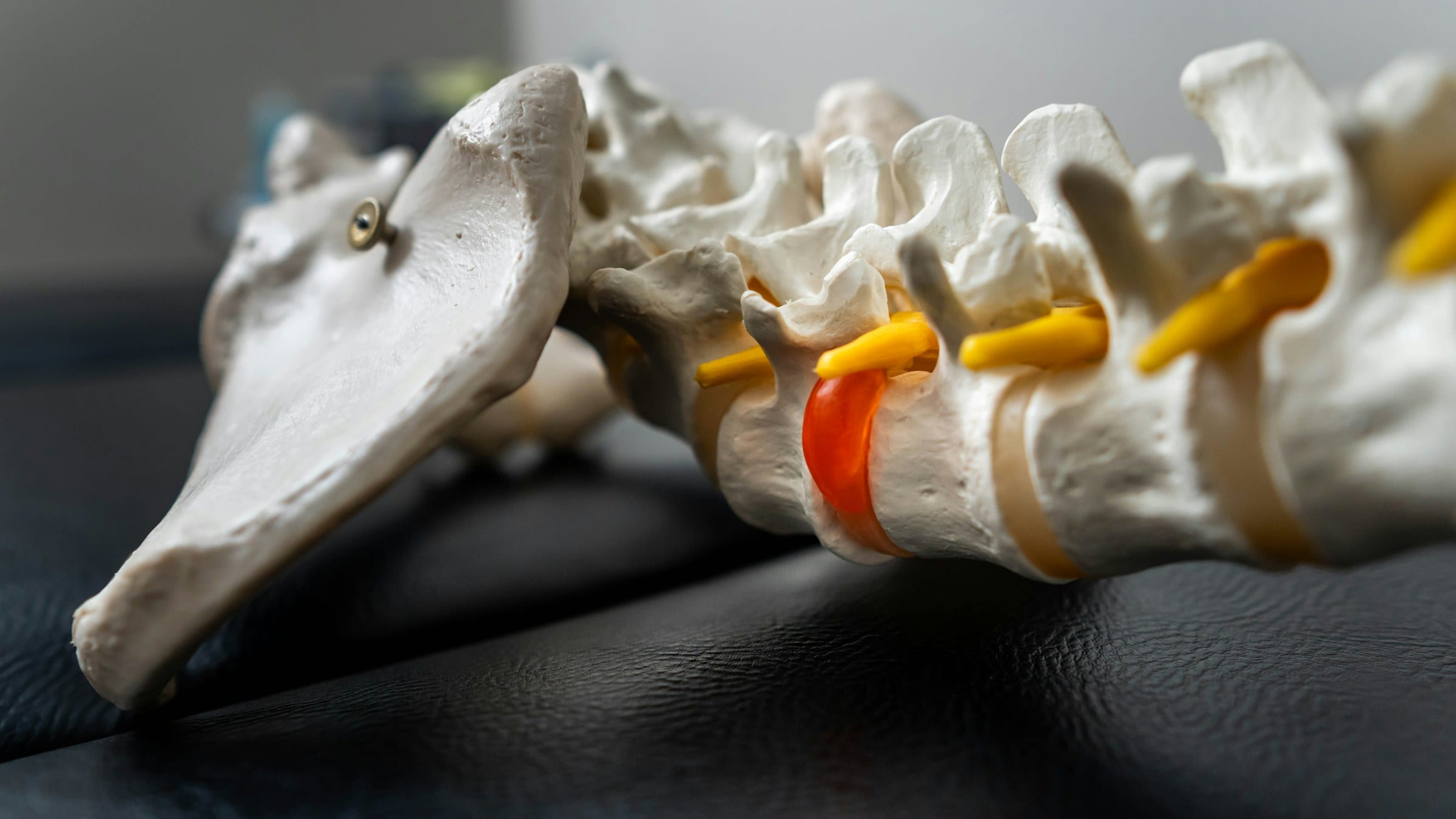
Your spinal discs are remarkable engineering. Each one consists of a tough fibrous outer ring called the annulus fibrosus surrounding a gel-like interior called the nucleus pulposus. Together they act as shock absorbers between each vertebra, allowing your spine to flex, rotate, and bear load throughout the day.
When the annulus tears or weakens, the nucleus can push outward — bulging, herniating, or in severe cases rupturing into the spinal canal. Once disc material occupies space the nervous system needs, compression and inflammation follow, and the consequences can be felt far from the spine itself.
Disc injuries can occur at any level of the spine, but are most common in two regions:
- Lumbar spine (lower back) — where the greatest mechanical load is placed
- Cervical spine (neck) — where a wide range of motion makes discs vulnerable to both trauma and wear
How Disc Injuries Happen
Not every disc injury begins with a dramatic event. While a single severe strain or traumatic impact — a car accident, a heavy lift gone wrong, a fall — can herniate an otherwise healthy disc, the more common story is gradual.
Over time, aging reduces the water content and elasticity of disc material and weakens the surrounding ligaments. The disc becomes less resilient, and what might have been a harmless twist or bend in younger years becomes the final straw that causes a compromised disc to rupture. Research also points to a hereditary component: disc degeneration and herniation tend to run in families, meaning some individuals carry a higher baseline risk regardless of their lifestyle.
Common contributing factors include:
- Repetitive bending, twisting, or heavy lifting
- Prolonged sitting or sedentary lifestyle
- Prior spinal trauma or whiplash injury
- Poor posture and spinal misalignment
- Obesity, which increases load on lumbar discs
- Smoking, which impairs disc nutrition and hydration
Symptoms by Location
Lumbar Disc Injuries (Lower Back)
The hallmark of a lumbar disc injury is sciatica — a pattern of pain, burning, tingling, and numbness that originates in the low back or buttock and radiates down the leg, sometimes reaching the foot. Nerve compression in the lumbar spine can also produce:
- Localized low back pain that worsens with sitting or bending
- Muscle weakness in the hip, thigh, or calf
- Difficulty standing upright after prolonged sitting
- In severe cases, loss of bladder or bowel control (a medical emergency — seek immediate care)
Cervical Disc Injuries (Neck)
A herniated disc in the neck creates a different but equally disruptive picture. Common symptoms include:
- Neck pain and stiffness, often worse with prolonged screen time
- Pain between the shoulder blades
- Radiating pain through the arm and into the hand
- Numbness, tingling, or weakness in the shoulders, arms, or fingers
- Headaches originating at the base of the skull
Because the upper cervical spine houses critical neurological structures, cervical disc injuries deserve particularly prompt evaluation.
Our Disc Injury Treatment Protocol
At Atlas Injury to Health, no two disc injuries are treated the same way. Every care plan begins with a thorough understanding of your specific injury and builds from there.
Comprehensive Evaluation
Your care begins with a detailed examination including neurological and orthopedic testing, postural analysis, and digital imaging where indicated. This allows us to pinpoint the exact location and severity of disc involvement and rule out conditions that require urgent medical referral.
Atlas Orthogonal & Specific Chiropractic Care
Spinal misalignment — particularly at the upper cervical spine — places uneven mechanical stress on discs throughout the entire spinal column. Our Atlas Orthogonal adjustments are precise, instrument-delivered corrections that restore proper alignment without forceful manipulation. By correcting structural imbalances, we reduce the load on compromised discs and relieve nerve compression from above.
SoftWave Tissue Regeneration Therapy
This advanced regenerative modality works at the tissue level to reduce inflammation, accelerate cellular repair, and promote healing in structures that have limited blood supply — like spinal discs. SoftWave therapy uses acoustic waves to stimulate the body's own healing response and support tissue regeneration.
Custom Therapeutic Exercise
A structured, progressive exercise program is essential to lasting disc recovery. We design individualized stabilization and strengthening protocols that support the affected spinal segment, correct the muscular imbalances that contributed to the injury, and significantly reduce the risk of re-injury.
Anti-Inflammatory Nutritional Support
Disc healing depends on having the right raw materials. We offer targeted nutritional guidance to reduce systemic inflammation and supply the nutrients — including collagen precursors, omega-3 fatty acids, and antioxidants — that disc and connective tissue repair require.
What to Expect at the Clinic
Your first visit will involve a thorough consultation and physical examination. We take the time to listen to your full history — when the pain started, what makes it better or worse, and how it is affecting your daily life. From there, we explain our findings clearly and build a care plan together. Most patients with disc injuries are seen multiple times per week in the early, acute phase of care, with frequency reducing as healing progresses. Many patients begin noticing improvement within the first several weeks of consistent treatment.
When to Seek Care
Do not wait for disc symptoms to resolve on their own. Untreated nerve compression can lead to progressive nerve damage, including lasting weakness or sensory loss. If you are experiencing any of the following, contact us promptly:
- Radiating leg or arm pain lasting more than a few days
- Numbness or tingling in the hands or feet
- Weakness in a limb
- Neck or back pain following an accident or fall
If you experience sudden loss of bladder or bowel control, seek emergency medical care immediately.
Frequently Asked Questions
Can a herniated disc heal without surgery?
Many disc herniations can improve significantly with conservative, non-surgical care. The disc itself has limited capacity to heal, but reducing nerve compression, restoring alignment, and supporting the surrounding musculature can lead to meaningful and lasting relief. Surgery is typically considered only when conservative care has been exhausted or when there is serious, progressive neurological compromise.
How is Atlas Orthogonal different from a regular chiropractic adjustment?
Atlas Orthogonal is a highly specialized upper cervical technique that uses a precise, instrument-delivered correction rather than manual manipulation. The adjustment is gentle and specific — targeting the atlas vertebra (C1) at the top of the spine — with no twisting or cracking. Because the upper cervical spine influences alignment throughout the entire spinal column, correcting this region can reduce mechanical stress on discs at every level below.
If you are living with disc pain in the lower back, neck, or radiating into your limbs, the team at Atlas Injury to Health is ready to help. Contact our Winter Garden or Ocala clinic today to schedule your comprehensive evaluation and take the first step toward relief.
Watch & Learn
Videos related to Disc Injury.
Why Is It Important to See a Chiropractor After a Car Accident?
Even a minor fender bender can cause disc injury and brainstem-affecting misalignment — here's why upper cervical chiropractic care matters after any car accident.
Watch →
Why X-Rays are Crucial for Low Back Pain Relief | Chiropractor for Back Pain in Winter Garden, FL
Discover why motion study X-rays are essential for diagnosing and treating low back pain with pinpoint precision.
Watch →