
TMJ Treatment in Winter Garden: Why Jaw Pain Starts in Your Neck
Written & medically reviewed by Dr. Michael St. Louis, D.C.
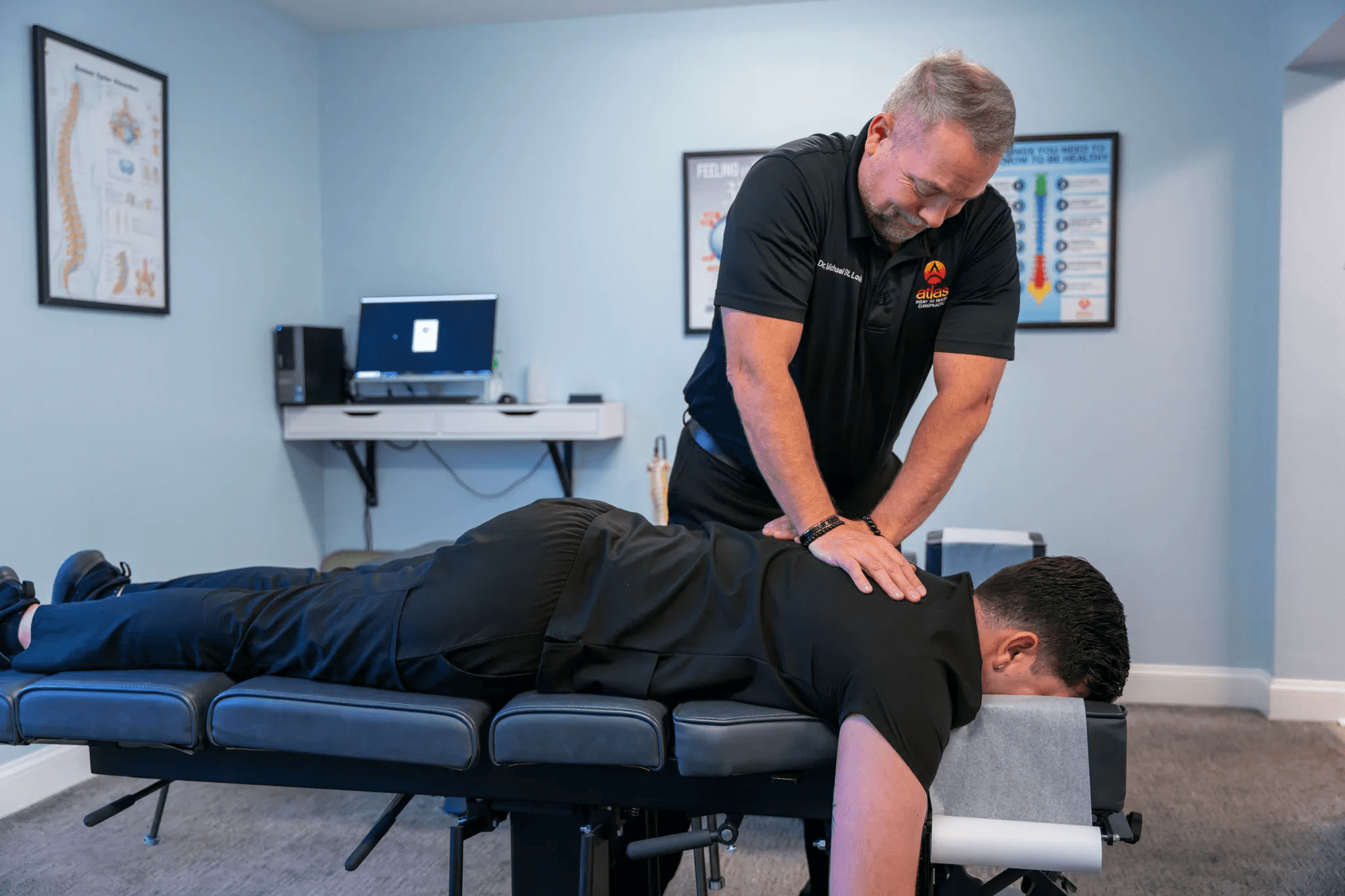
Effective TMJ treatment in Winter Garden addresses more than the jaw itself — because in most cases, the root cause of jaw pain and clicking actually begins with misalignment in the upper neck. If you've tried a dental splint or night guard and still deal with clicking, tension, or facial pain, the missing piece may be your cervical spine, not your teeth.
At Atlas Injury to Health, we see this pattern often in Winter Garden's active adults and families: months of dental-only treatment that manages symptoms but never resolves the underlying mechanical problem. Understanding the neck-jaw connection is the first step toward lasting relief.
Key Takeaways
- TMJ (temporomandibular joint) dysfunction is frequently driven by misalignment in the upper cervical spine, not just the jaw joint itself.
- Dental splints and night guards can reduce symptoms but often don't address the postural and structural cause of the problem.
- Cranial Facial Release (CFR) is a specialized therapy that targets tension patterns in the skull, sinuses, and jaw — a service rarely offered by other Winter Garden providers.
- Upper cervical care and Atlas Orthogonal adjustments can restore proper head-neck alignment, easing pressure on the jaw joint.
- A thorough evaluation — not a one-size-fits-all night guard — is essential for identifying the true source of your TMJ symptoms.
Understanding the Neck-Jaw Connection
The temporomandibular joint connects your jawbone to your skull, but it doesn't work in isolation. It sits just below your ear, in close proximity to the muscles, nerves, and joints of your upper neck. When your cervical spine — especially the top two vertebrae — shifts out of proper alignment, it changes how your head balances on your neck.
This postural shift forces your jaw muscles to compensate. Over time, that compensation can show up as clicking, popping, limited range of motion, or chronic facial pain. It's a mechanical relationship that's often overlooked in traditional dental-only approaches to TMJ treatment.
Why Forward Head Posture Matters
Many of our Winter Garden patients spend long hours at desks, in cars, or looking down at phones — habits that encourage forward head posture. This posture places extra strain on the muscles connecting your skull, jaw, and neck.
As the head drifts forward, the jaw often shifts to compensate, altering how the upper and lower teeth meet. This can trigger or worsen TMJ symptoms, even in people who've never had a dental issue. Addressing posture and cervical alignment is often just as important as anything happening in the mouth.
Where Dental-Only Treatment Falls Short
Splints and night guards are common first-line treatments for TMJ, and they can genuinely help reduce nighttime clenching and cushion the joint. But they're designed to manage symptoms, not correct the structural misalignment that may be driving them.
If your jaw pain stems from an upper cervical misalignment, a splint alone will likely provide only partial or temporary relief. Many patients tell us they've worn a night guard for months, or even years, with symptoms that keep returning once the guard comes out.
This is why a comprehensive evaluation matters. At Atlas, we assess:
- Cervical spine alignment and mobility
- Posture and head position
- Muscle tension patterns around the jaw, skull, and neck
- Any history of trauma, whiplash, or concussion that could have disrupted alignment
Understanding the full picture helps us determine whether your TMJ symptoms are primarily dental, structural, or — as is often the case — a combination of both.
How Cranial Facial Release Supports TMJ Relief
One of the most distinctive tools we use for TMJ-related tension is Cranial Facial Release (CFR), a gentle therapy that targets the cranial bones and connective tissue surrounding the jaw, sinuses, and skull. Unlike splint therapy, which works externally on the teeth, CFR works to release internal tension patterns that can affect jaw mechanics, sinus drainage, and even breathing.
Many patients seeking TMJ treatment in Winter Garden aren't aware this option even exists — CFR is rarely offered outside specialized clinics like ours. For patients whose jaw symptoms are tangled up with sinus pressure, headaches, or a sense of facial tightness, CFR can address layers of tension that dental appliances simply aren't designed to reach.
What to Expect from a CFR Session
CFR involves light, precise pressure applied to specific points around the skull and face. It's non-invasive and generally well-tolerated, even by patients who are sensitive around the jaw and head area. Sessions are typically brief, and many patients report a sense of release and reduced pressure shortly afterward.
It's important to note that CFR works best as part of a broader treatment plan — one that also considers cervical alignment — rather than as a standalone fix.
The Role of Upper Cervical Care and Atlas Orthogonal
Because the top of the neck plays such a central role in head posture and jaw mechanics, correcting misalignment here is often a key step in resolving TMJ symptoms long-term. Our Atlas Orthogonal technique uses precise, low-force adjustments to realign the upper cervical spine without the twisting or popping associated with traditional adjustments.
This precision matters. The upper neck houses a dense network of nerves and sits at the base of the skull, so even small misalignments can have outsized effects on jaw position, muscle tension, and overall head balance. By restoring proper alignment here, many patients find their jaw muscles no longer have to overcompensate — which can ease clicking, tension, and pain over time.
We often pair Atlas Orthogonal with broader upper cervical care and general chiropractic care to support whole-body alignment, particularly for patients who also deal with related issues like headaches, neck pain, or vertigo.
Who Tends to Benefit Most
TMJ dysfunction affects people differently, but in our experience, certain patterns show up frequently:
- Patients with a history of whiplash or car accidents, where cervical alignment was disrupted
- Desk workers and students with prolonged forward head posture
- Active adults involved in contact sports or high-impact activity
- Patients who've tried splints without lasting relief
- Those experiencing jaw symptoms alongside headaches, sinus pressure, or neck stiffness
If any of these describe your situation, it may be worth exploring whether cervical alignment is contributing to your jaw pain.
Building a Personalized Treatment Plan
There's no single fix that works for every case of TMJ dysfunction. That's why we start with a thorough assessment of your posture, cervical spine, and jaw mechanics before recommending a plan. For some patients, that means a combination of CFR and upper cervical adjustments. For others, coordination with a dentist for splint therapy remains a valuable part of the plan — we're not opposed to combining approaches when it makes sense.
According to the American Chiropractic Association, a multidisciplinary approach that considers the whole musculoskeletal system tends to produce better outcomes than treating symptoms in isolation. Organizations like the Mayo Clinic and NIH also note that TMJ disorders have multiple potential contributing factors, reinforcing the value of a comprehensive evaluation rather than a one-size-fits-all approach.
If you've been managing jaw pain with a night guard alone and still aren't feeling relief, it may be time to look higher — literally — at what's happening in your neck.
Recognizing the Warning Signs Beyond Jaw Clicking
Jaw clicking often gets the attention, but TMJ dysfunction usually announces itself through a wider pattern of symptoms tied to the neck and skull. Watch for morning headaches, ringing or fullness in the ears, dizziness when turning your head, and unexplained tension across the shoulders. Some people also notice their bite feels "off" or that chewing tires out their jaw quickly. Because these signals overlap with cervical spine issues, they're frequently dismissed or treated separately. Recognizing them together, rather than in isolation, is often the first step toward identifying the root cause and pursuing TMJ treatment in Winter Garden that addresses the whole picture.
Frequently Asked Questions
Can neck misalignment really cause TMJ symptoms?
Yes. The upper cervical spine directly influences head posture and how your jaw muscles function. Misalignment here can create compensatory strain on the jaw joint, contributing to clicking, pain, or limited movement.
Is Cranial Facial Release painful?
No — CFR uses light, precise pressure and is generally well-tolerated. Most patients describe it as gentle, and many notice a feeling of release in the jaw, sinuses, or head shortly after a session.
Do I need to stop wearing my night guard if I start chiropractic care for TMJ?
Not necessarily. Splint therapy and cervical-focused care can often work together. We recommend discussing your full treatment plan with both your dentist and your chiropractor so both approaches are coordinated.
How long does it take to see improvement in TMJ symptoms?
This varies by patient and depends on the severity and duration of misalignment, as well as contributing factors like posture and prior injuries. A personalized evaluation is the best way to get a realistic timeline for your specific situation.
What if my TMJ pain started after a car accident?
Jaw pain following a car accident is common and often linked to whiplash-related cervical misalignment. If this sounds like your situation, it's worth having your neck evaluated alongside your jaw, as both may need attention for full relief.
Ready to Address the Root Cause of Your Jaw Pain?
If dental treatments alone haven't resolved your TMJ symptoms, it may be time for a different perspective. At Atlas Injury to Health in Winter Garden, we look beyond the jaw to identify how your neck, posture, and cranial structures may be contributing to your pain. Schedule a consultation today to find out whether upper cervical care, Atlas Orthogonal, or Cranial Facial Release could be the missing piece in your TMJ treatment plan.
Ready to take the next step?
Schedule a consultation to see how Atlas can help you.
Schedule a Consultation