Neck Pain Treatment in Winter Garden: Finding the Structural Root Cause
Written & medically reviewed by Dr. Michael St. Louis, D.C.
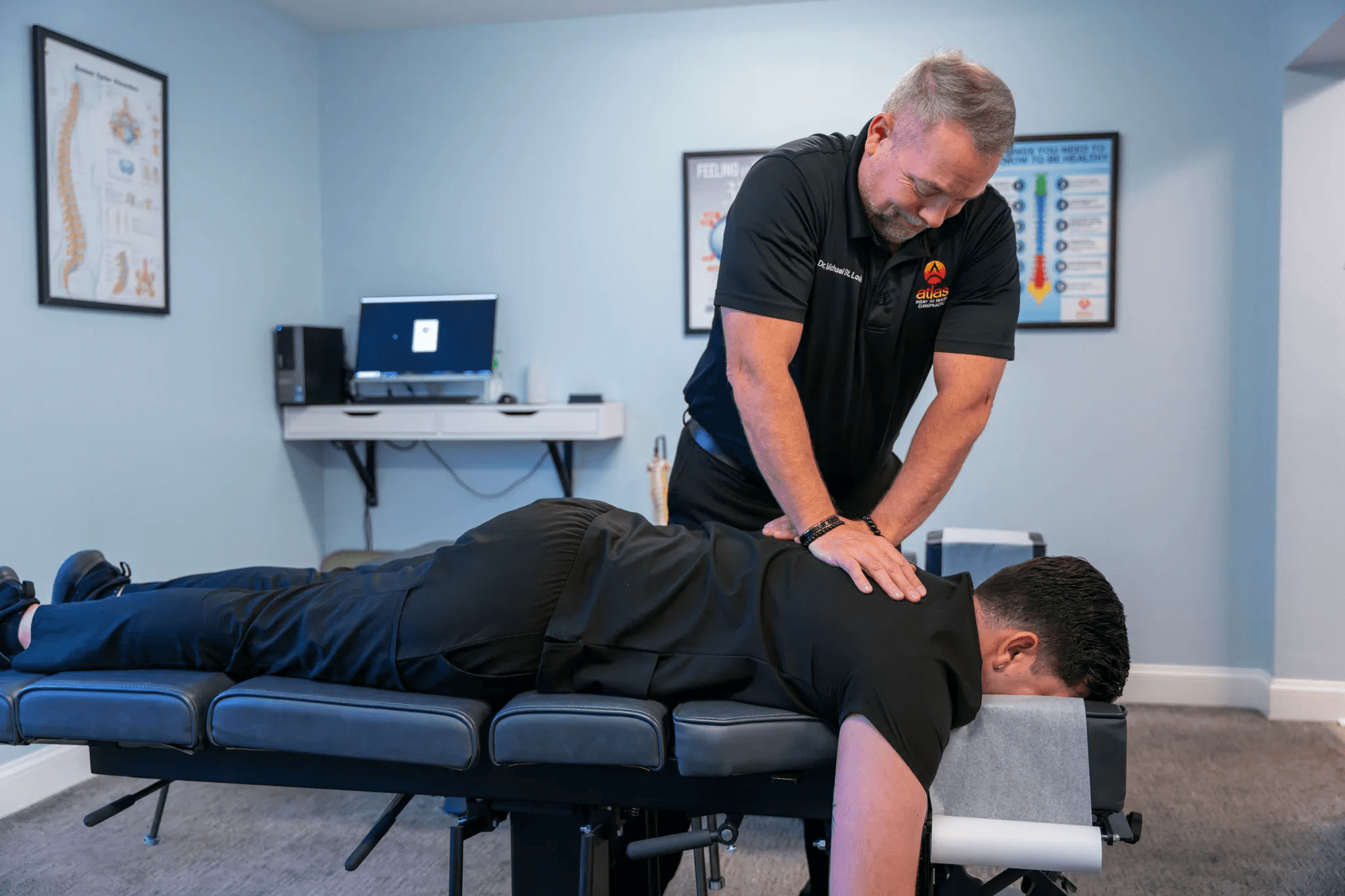
Effective neck pain treatment in Winter Garden starts with identifying why your neck hurts, not just masking the symptom. At Atlas Injury to Health, that means evaluating the structural alignment of your upper cervical spine — the area most often overlooked by quick-fix approaches — before recommending a corrective, non-surgical care plan.
If you've tried stretching, heat, over-the-counter pain relievers, or even a massage and the relief never lasts, there's a good chance the real issue isn't muscular at all. It's structural. And structural problems need structural solutions.
Key Takeaways
- Neck pain is frequently caused by misalignment in the upper cervical spine, not just muscle tension — this is especially common with "tech neck," whiplash, and postural habits from desk work.
- Winter Garden's active, family-oriented, and professional population faces unique risk factors: long commutes, hybrid desk work, youth sports, and an increasingly sedentary screen-heavy lifestyle.
- Atlas Orthogonal is a gentle, precise, non-manual technique that corrects atlas (C1) misalignment without popping or twisting the neck.
- SoftWave Therapy uses acoustic wave technology to accelerate tissue healing and reduce inflammation in soft tissue surrounding the cervical spine.
- Getting an accurate diagnosis — often including targeted imaging — is essential before starting any neck pain treatment plan.
Why Winter Garden Residents Are Especially Prone to Neck Pain
Winter Garden has grown into one of west Orlando's most desirable communities for young families, active adults, and remote or hybrid professionals. That lifestyle, while great for quality of life, creates a specific set of risk factors for chronic neck pain.
Desk workers and "tech neck." Hours spent hunched over laptops, tablets, and phones place enormous strain on the cervical spine. Every inch your head tilts forward multiplies the effective load on your neck muscles and joints — a pattern chiropractors commonly call "tech neck." Over months and years, this repeated stress can shift how the vertebrae in your neck sit relative to one another.
Youth athletes. Winter Garden's youth sports culture — soccer, cheer, baseball, lacrosse — means plenty of collisions, falls, and repetitive strain injuries. A hard hit during a game can trigger a subtle vertebral misalignment that doesn't show up as an obvious injury but causes lingering stiffness, headaches, or reduced range of motion.
Commuters and fender-benders. With State Road 429 and the Winter Garden-Vineland corridor seeing heavy daily traffic, even minor rear-end collisions are common. Whiplash from a low-speed accident can misalign the cervical spine without any visible bruising or swelling, which is why some car accident-related neck pain doesn't appear until days later.
Active adults. Golf, pickleball, cycling, and gym training are popular locally, and repetitive rotational or high-impact movement can gradually stress the neck's supporting structures.
Understanding Cervical Mechanics: What's Actually Happening in Your Neck
Your cervical spine consists of seven vertebrae that support the full weight of your head — roughly 10-12 pounds — while allowing an extraordinary range of motion. The topmost vertebra, the atlas (C1), is particularly important because it houses the brainstem and plays a central role in nerve signaling throughout the body.
When the atlas shifts even slightly out of proper alignment — something chiropractors refer to as a subluxation — it can:
- Restrict normal joint motion and irritate surrounding nerves
- Create compensatory muscle tension as your body tries to stabilize the misalignment
- Alter posture throughout the spine, sometimes contributing to headaches, vertigo, or tinnitus
- Increase wear on cervical discs and joints over time, potentially contributing to a pinched nerve or disc-related issues
This is why generic stretching or short-term pain management often fails: it addresses the symptom (tight muscles) without correcting the underlying mechanical cause (vertebral misalignment).
How Atlas Injury to Health Approaches Neck Pain Treatment in Winter Garden
Every patient starts with a thorough evaluation of cervical alignment, posture, and range of motion. Diagnostic imaging, including X-rays, may be used to precisely measure how the atlas and surrounding vertebrae are positioned — information that guides a targeted, individualized care plan.
Atlas Orthogonal: Precision Without Force
Atlas Orthogonal is a specialized, low-force technique designed specifically to correct atlas misalignment. Rather than the twisting or popping associated with traditional adjustments, Atlas Orthogonal uses a precise, instrument-guided tap to gently realign the C1 vertebra.
This approach is particularly well-suited for patients who are hesitant about manual manipulation, including those recovering from whiplash, concussions, or TMJ dysfunction. Because the technique is so precise, it's also a good fit for young athletes and desk workers whose neck pain stems from repetitive strain rather than acute trauma.
SoftWave Therapy: Accelerating Soft Tissue Healing
While correcting alignment addresses the structural cause, SoftWave Therapy helps the surrounding soft tissue heal faster. This technology delivers focused acoustic waves to stimulate cellular repair, reduce inflammation, and improve blood flow to injured or chronically tense muscles and connective tissue.
For many Winter Garden patients dealing with tech neck or sports-related strain, combining Atlas Orthogonal's structural correction with SoftWave's regenerative support offers a more complete recovery path than either approach alone.
Complementary Chiropractic Care
Depending on your specific presentation, your care plan may also include broader chiropractic care to support whole-spine alignment, along with guidance on ergonomics, posture correction, and at-home exercises to reinforce your progress between visits.
What to Expect at Your First Visit
- Consultation and health history — discussing your symptoms, lifestyle, and any prior injuries.
- Postural and structural assessment — evaluating how your head, neck, and shoulders align.
- Diagnostic imaging (if appropriate) — to precisely identify misalignment.
- Personalized care plan — combining Atlas Orthogonal, SoftWave, or complementary chiropractic techniques based on your specific findings.
Most patients notice gradual, cumulative improvement rather than an overnight fix, which reflects the fact that structural correction — not just symptom suppression — is the goal.
When to Seek Professional Evaluation
According to the Mayo Clinic, neck pain that persists beyond a few days, radiates into the arms, or is accompanied by numbness, weakness, or severe headaches warrants professional evaluation. The American Chiropractic Association also notes that early intervention for musculoskeletal pain tends to produce better long-term outcomes than waiting until symptoms become chronic.
If you're dealing with ongoing neck pain, it's worth having your cervical alignment properly assessed rather than continuing to manage symptoms on your own. For general health guidance on neck pain and related conditions, resources like MedlinePlus can also help you understand when self-care is appropriate versus when to see a provider.
Frequently Asked Questions
What causes neck pain that doesn't go away with rest or stretching?
Persistent neck pain often stems from a structural issue — such as misalignment of the upper cervical spine — rather than simple muscle tension. Muscles tighten up in response to misalignment, so stretching may offer temporary relief without addressing the root cause.
Is Atlas Orthogonal safe for someone who has never had a chiropractic adjustment?
Yes. Atlas Orthogonal is a gentle, precise, low-force technique that doesn't involve the twisting or popping associated with traditional adjustments, making it a comfortable starting point for first-time patients.
How is tech neck different from a typical muscle strain?
Tech neck develops gradually from sustained forward head posture, often from screen use, and can eventually contribute to actual vertebral misalignment — not just short-term muscle fatigue. That's why it tends to respond better to structural correction than to stretching alone.
Can neck pain from a car accident show up days after the crash?
Yes. Whiplash and related cervical misalignment can cause delayed-onset symptoms, sometimes appearing 24–72 hours after a collision. If you've been in a recent accident, it's worth getting evaluated even if you feel fine initially.
How many visits does it typically take to see improvement?
This varies by individual and depends on the severity and duration of the misalignment. Many patients notice initial improvement within the first few visits, with more complete structural correction occurring gradually over the course of a personalized care plan.
Ready to Address the Root Cause of Your Neck Pain?
If chronic neck pain, tension headaches, or tech-neck stiffness are affecting your daily life, don't settle for temporary relief. Visit our Winter Garden location page to learn more about our team, or schedule a consultation with Atlas Injury to Health today to get a thorough structural evaluation and a personalized path back to lasting comfort.
Ready to take the next step?
Schedule a consultation to see how Atlas can help you.
Schedule a Consultation