
Whiplash Treatment in Ocala: Why Early Care Prevents Chronic Pain
Written & medically reviewed by Dr. Michael St. Louis, D.C.
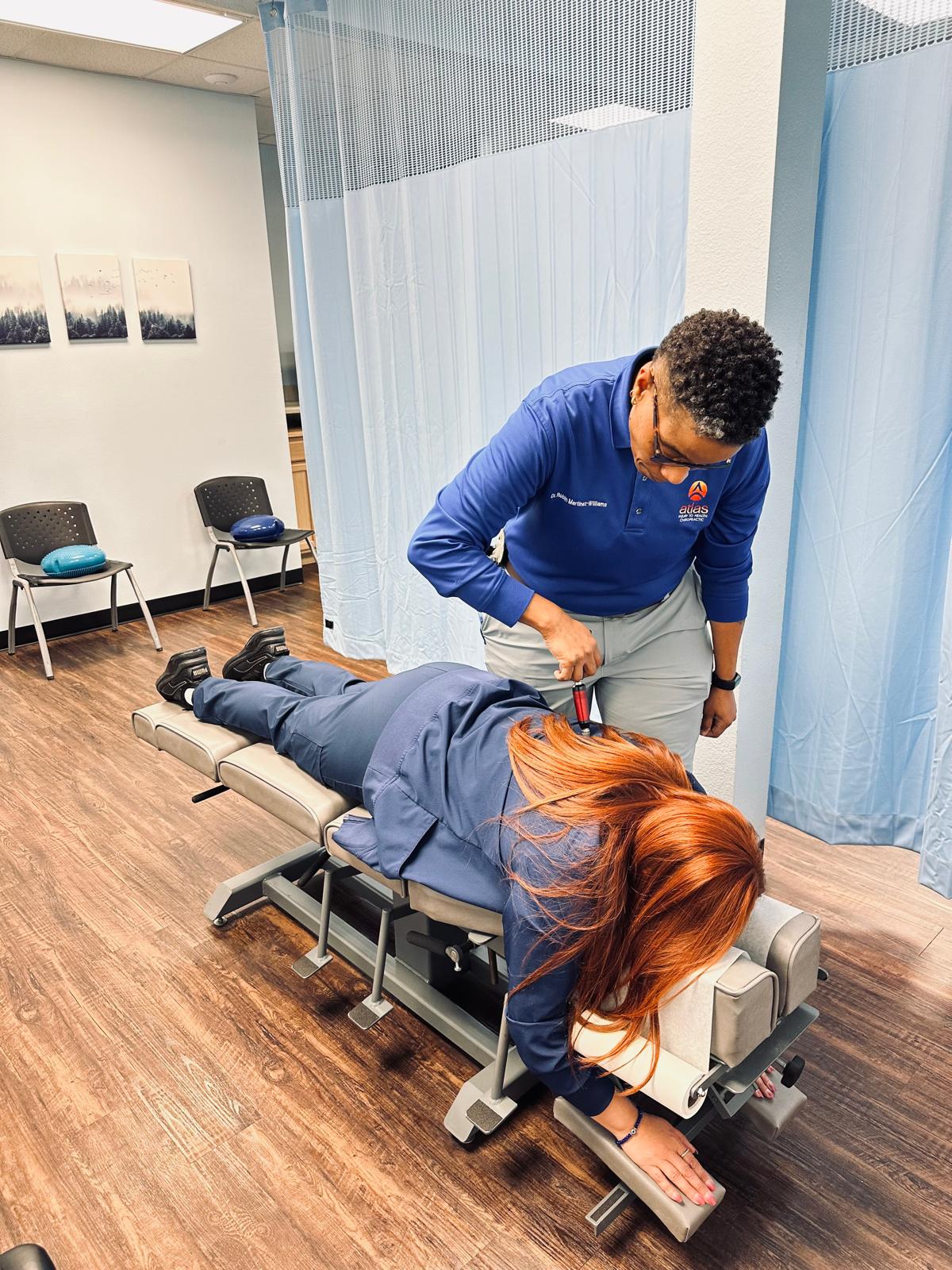
The best whiplash treatment in Ocala starts within days of your car accident, not weeks — because Florida's Personal Injury Protection (PIP) law requires medical care within 14 days of the crash, and because untreated whiplash has a well-documented tendency to become chronic neck pain, headaches, and stiffness that lingers for months or years. If you were in a fender-bender or a more serious collision anywhere in Marion County, getting evaluated right away is one of the most important things you can do for your long-term health.
At Atlas Injury to Health in Ocala, we see this scenario often: someone feels "fine" the day of the accident, only to wake up 48 or 72 hours later with a stiff, aching neck that won't turn side to side. That delay is normal — and it's exactly why early evaluation matters, even when you feel okay at the scene.
Key Takeaways
- Whiplash symptoms often don't appear until 24–72 hours after a car accident, so feeling "fine" at the scene doesn't rule out injury.
- Florida's PIP insurance requires treatment within 14 days of the accident, or you risk losing coverage for your medical bills.
- Early, gentle chiropractic care — especially precise upper cervical methods like Atlas Orthogonal — helps prevent whiplash from becoming a chronic pain condition.
- Older adults and retirees can benefit from whiplash treatment in Ocala without the forceful "cracking" adjustments often associated with traditional chiropractic care.
- Atlas Injury to Health evaluates whiplash injuries, coordinates with your PIP claim, and builds a recovery plan specific to your body and your accident.
What Actually Happens to Your Neck During a Whiplash Injury
Whiplash occurs when your head is snapped rapidly backward and forward, faster than your neck muscles can react to protect the joints and ligaments underneath. This isn't limited to high-speed highway crashes — many of our Ocala patients are surprised to learn that whiplash can occur in a low-speed rear-end collision, not only in a high-impact crash.
The rapid motion can strain muscles, sprain ligaments, and — critically — irritate the small joints and nerves at the top of your spine, near the base of your skull. This is why whiplash so often produces symptoms far beyond a stiff neck, including:
- Headaches that start at the base of the skull
- Dizziness or a feeling of being off-balance
- Tingling or numbness radiating into the shoulders or arms
- Difficulty concentrating or unusual fatigue
- Reduced range of motion when turning your head to check mirrors while driving
If any of these sound familiar, it's worth reading more about the specific whiplash condition and how it differs from a typical muscle strain, as well as our broader page on car accident injuries and how they're evaluated.
Why Delayed-Onset Symptoms Catch People Off Guard
One of the trickiest aspects of whiplash is that adrenaline and inflammation can mask pain in the first hours after a crash. Many patients tell us they drove home, went to work the next day, and only started feeling symptoms two or three days later — sometimes after a night's sleep, when swelling and muscle guarding set in.
This delay creates a real problem: people assume they're uninjured and skip medical care entirely, only to be dealing with chronic neck pain months later. According to the Mayo Clinic, whiplash symptoms can indeed take a day or more to fully appear, which is why medical guidance consistently recommends evaluation after any collision involving a sudden jolt to the head or neck — regardless of how you feel immediately afterward.
The Florida PIP 14-Day Window You Can't Afford to Miss
Florida is a no-fault insurance state, which means your own auto policy's Personal Injury Protection (PIP) coverage is generally responsible for your initial medical bills after a crash — but only if you're seen by a qualified provider within 14 days of the accident. Miss that window, and your PIP carrier can legally deny coverage for whiplash treatment, leaving you responsible for the bills yourself.
A few practical points for Ocala drivers:
- Don't wait for pain to "prove" you're injured. Whiplash's delayed onset means the 14-day clock starts at the accident, not when symptoms appear.
- Your available PIP benefit depends on your policy and on how your care is documented. Florida's no-fault framework ties the benefit level to whether a qualified provider documents an emergency medical condition, so the specifics are worth confirming directly with your carrier or attorney.
- Documentation matters. A thorough initial exam creates the medical record your insurance claim — and any personal injury case — will rely on later.
We work directly with patients navigating PIP claims and can help make sure your care is documented properly from your very first visit.
Gentle, Precise Whiplash Treatment in Ocala for Every Age
Ocala has a large retiree and older-adult population, and we hear a common concern from these patients: "I don't want someone twisting or cracking my neck." That's a completely reasonable concern, especially after a car accident, when the neck's ligaments and joints are already inflamed and sensitive.
This is exactly why our approach to whiplash treatment in Ocala centers on Atlas Orthogonal, a precision-based, low-force technique that realigns the topmost vertebra (the atlas) using gentle, calculated adjustments — no twisting, popping, or high-velocity thrusts required. For patients recovering from whiplash, this matters for a few reasons:
- Reduced re-injury risk. Traumatized soft tissue doesn't respond well to forceful manipulation; gentle correction avoids adding stress to already-inflamed structures.
- Better tolerance for older patients. Atlas Orthogonal is comfortable for patients with osteoporosis, arthritis, or general apprehension about chiropractic care.
- Addresses the root cause. Whiplash frequently misaligns the upper cervical spine specifically, so precise correction at that level can relieve headaches, dizziness, and referred pain more directly than general adjustments alone.
You can learn more about how this technique works on our Atlas Orthogonal service page. We also frequently combine this with imaging, such as digital X-rays, to precisely map misalignment before any hands-on care begins — an important step for accident cases where documentation and accuracy both matter.
Why Early Care Prevents Chronic Whiplash Pain
The core reason we emphasize speed isn't just insurance paperwork — it's biology. Inflamed, misaligned joints that go uncorrected tend to guide surrounding muscles into compensatory patterns. Over weeks and months, this can harden into chronic tension, recurring headaches, and reduced neck mobility that becomes much harder to resolve than the original injury.
Prompt evaluation after neck trauma is widely recommended in clinical practice, and organizations including the American Chiropractic Association and the National Institutes of Health publish patient guidance on neck injury and recovery. While every case is different and outcomes can't be guaranteed, addressing whiplash while it's still an acute, localized injury gives your body the best chance to restore function rather than settle into a chronic pattern.
What to Expect at Your First Visit
If you've been in a car accident in or around Ocala, here's what a first evaluation with our team typically looks like:
- A detailed history of the accident — direction of impact, speed, and how symptoms have evolved.
- A physical and neurological exam to assess range of motion, muscle guarding, and nerve involvement.
- Imaging as needed to rule out fracture or serious structural injury and precisely locate misalignment.
- A personalized care plan, often starting with gentle Atlas Orthogonal adjustments, paced to your body's tolerance.
- PIP documentation support, so your insurance claim reflects the true scope of your injury from day one.
Our Ocala location is set up specifically to serve patients dealing with fresh accident injuries, alongside our long-standing Winter Garden practice.
Frequently Asked Questions
How soon after a car accident should I see a chiropractor for whiplash?
Ideally within a few days, and no later than 14 days to stay compliant with Florida's PIP insurance requirements. Even if you feel fine initially, an evaluation establishes a baseline and catches injuries before delayed symptoms worsen.
Can whiplash cause long-term problems if untreated?
It can. Untreated whiplash sometimes progresses into chronic neck pain, recurring headaches, and reduced mobility, since inflamed joints and compensating muscles can settle into lasting patterns. Early, appropriate care significantly lowers this risk for most patients.
Is chiropractic adjustment safe for whiplash, especially for older adults?
Yes, when the technique is matched to the patient. Atlas Orthogonal uses gentle, precise, low-force corrections rather than forceful twisting, making it a comfortable option for older adults, retirees, or anyone apprehensive about traditional adjustments.
Will my Florida car insurance cover whiplash treatment?
In most cases, your PIP coverage will pay for initial treatment if you're seen within 14 days of the accident and your provider documents an emergency medical condition. We can help ensure your records support your claim.
What if I don't feel pain right after my accident?
That's common — whiplash symptoms often appear 24 to 72 hours later due to inflammation and adrenaline masking discomfort initially. It's still wise to be evaluated promptly rather than waiting for pain to appear.
Take the First Step Toward Recovery
If you've recently been in a car accident anywhere near Ocala, don't wait for pain to tell you something's wrong. Schedule a whiplash evaluation with Atlas Injury to Health today, and let our team build a gentle, personalized recovery plan that protects both your health and your PIP claim — before that 14-day window closes.
This article is for informational purposes and is not a substitute for personalized medical advice. Please consult a qualified healthcare provider, such as those at Mayo Clinic or MedlinePlus, to discuss your specific symptoms and health history.
Related Articles
What Can I Do for Whiplash? Your Complete Guide to Treatment Options
Explore the most effective whiplash treatment options — from at-home care to Atlas Orthogonal chiropractic — and learn how to recover faster after a neck injury.
Neck Pain Treatment in Ocala: A Gentle, Non-Surgical Path to Relief
Discover how Atlas Orthogonal and SoftWave Therapy offer Ocala patients a gentle, non-surgical path to lasting neck pain relief — no medication, no invasive procedures.
Ready to take the next step?
Schedule a consultation to see how Atlas can help you.
Schedule a Consultation