SoftWave Therapy in Ocala: Regenerative Relief Without Surgery
Written & medically reviewed by Dr. Michael St. Louis, D.C.
SoftWave therapy in Ocala is an FDA-cleared, non-invasive treatment that uses unfocused acoustic shockwaves to stimulate your body's own regenerative and reparative cells, helping relieve chronic joint and soft-tissue pain without surgery or extended downtime. For Ocala's active retirees, working families, and horse-country community, it has become an appealing option for arthritis, tendon degeneration, and stubborn aches that haven't responded to rest or over-the-counter remedies.
If you've spent years managing knee stiffness from a lifetime in the saddle, shoulder pain from farm work, or hip and joint discomfort that limits your independence, you deserve options that go beyond masking discomfort. SoftWave is one of those options, and it fits naturally into a broader care journey focused on restoring function rather than chasing symptoms.
Key Takeaways
- SoftWave therapy in Ocala uses unfocused shockwave technology to stimulate the body's natural healing response at the cellular level.
- It's FDA-cleared, non-invasive, and typically requires no downtime, making it well suited for retirees and active adults who want to stay on their feet.
- SoftWave is often used for chronic joint pain, arthritis, and tendon degeneration when rest, medication, or prior care hasn't provided lasting relief.
- At Atlas, SoftWave complements Atlas Orthogonal upper cervical care as part of a broader Better → Stronger → Healthier care journey.
- Candidacy depends on your specific condition and health history — a consultation with our clinical team is the best first step.
Understanding How SoftWave Therapy Works
SoftWave therapy delivers unfocused, high-energy acoustic pulses through the skin to the affected tissue. Unlike focused shockwave devices that concentrate energy at a single point, unfocused shockwave technology disperses those pulses across a broader treatment area, engaging a wider network of cells.
This matters because chronic joint and soft-tissue pain rarely comes from one isolated spot. Degenerative changes in a knee, hip, shoulder, or elbow typically affect surrounding tendons, ligaments, and connective tissue as well. Unfocused shockwaves are designed to address that broader zone rather than a single pinpoint.
The Cellular Mechanism Behind the Relief
At the cellular level, the mechanical energy from SoftWave pulses triggers a cascade of biological responses:
- Increased blood flow to the treated area, delivering oxygen and nutrients needed for tissue repair.
- Stimulation of stem cell activity in the treated tissue, encouraging the body's own regenerative processes.
- Reduction of inflammatory markers that contribute to chronic pain and stiffness.
- Breakdown of scar tissue and calcification that can develop in chronically degenerated tendons or joints.
This is why SoftWave is often described as "regenerative" rather than simply palliative. The goal isn't to numb pain temporarily — it's to encourage the underlying tissue to heal itself. Organizations like the National Institutes of Health have published research on shockwave technology's role in soft-tissue repair, and it's worth discussing the current evidence with your provider so you understand realistic expectations for your specific condition.
Why SoftWave Resonates With Ocala's Community
Ocala's demographics shape the kind of pain relief people are searching for. Many residents are retirees who want to preserve their independence and mobility well into their later years. Others are lifelong equestrians and horse-industry professionals whose joints and connective tissue have absorbed decades of repetitive strain. Still others are working families balancing physically demanding jobs with the desire to stay active with their kids and grandkids.
Across all these groups, a common thread emerges: the desire to avoid surgery, avoid long recovery periods, and avoid medication dependence — while still getting real relief.
Common Conditions SoftWave May Support
SoftWave is frequently used to help with:
- Chronic knee, hip, and shoulder pain related to arthritis
- Tendon degeneration, including chronic tendinopathies that haven't resolved with rest
- Plantar fasciitis and heel pain
- Chronic tennis elbow or golfer's elbow
- Lingering soft-tissue pain following old injuries that never fully healed
For Ocala's equestrian community specifically, repetitive strain on the wrists, shoulders, hips, and lower back is common. SoftWave's ability to address broader tissue zones — rather than one narrow point — can be particularly relevant for these overuse patterns.
What to Expect During a SoftWave Session
One of the most appealing aspects of SoftWave therapy is its simplicity from the patient's perspective. Sessions are typically brief, performed in-office, and require no incisions, anesthesia, or needles.
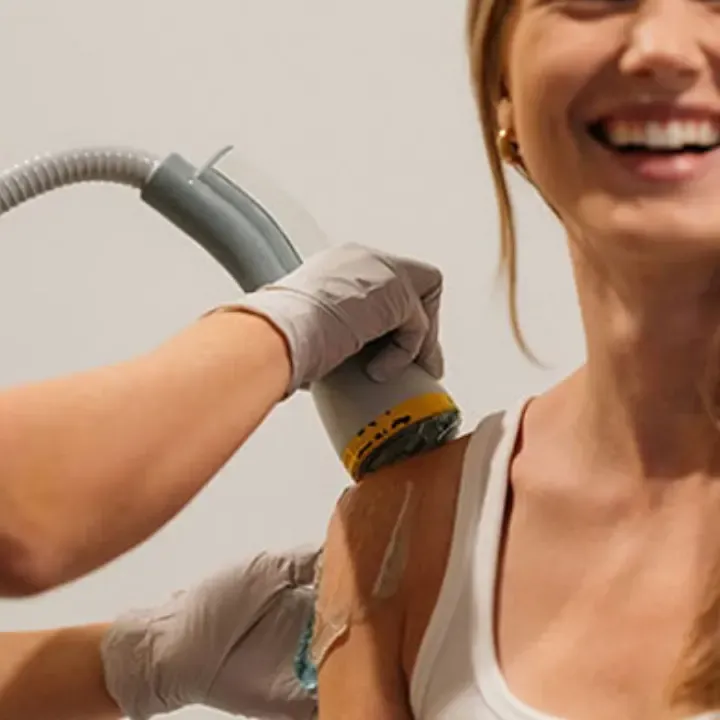
During a session, our clinical team applies a handheld device to the treatment area, delivering a series of acoustic pulses. Patients often describe a pressure or tapping sensation rather than sharp pain. Most people resume normal daily activities immediately afterward — a meaningful difference compared to the recovery timelines associated with surgical intervention.
Because SoftWave stimulates a biological healing response rather than providing instant numbing, results build progressively over a series of sessions rather than appearing after a single visit. Your provider will walk you through what a realistic session plan looks like based on your specific condition, its severity, and how long you've been dealing with it.
Who Should Consider Exploring SoftWave
SoftWave therapy is often a good fit for people who:
- Have chronic joint or soft-tissue pain that hasn't improved with rest, stretching, or medication
- Want to avoid or delay surgical intervention
- Are looking for a low-downtime option that fits an active lifestyle
- Have tried other conservative approaches without lasting results
It's not a fit for every condition, and a thorough evaluation with advanced diagnostics is an important first step to confirm SoftWave is appropriate for your situation rather than a condition that needs a different approach entirely.
How SoftWave Fits Into Your Broader Care Journey at Atlas
At Atlas Injury to Health, we don't view SoftWave as a standalone fix. It's one piece of a more complete care journey — one we describe as Better → Stronger → Healthier.
Chronic joint and soft-tissue pain rarely exists in isolation from the nervous system. Misalignment at the top of the spine can affect how the body processes pain signals, regulates inflammation, and coordinates movement throughout the rest of the body. That's why many of our Ocala patients pair SoftWave with Atlas Orthogonal upper cervical care.
- Better: SoftWave addresses the localized joint or soft-tissue degeneration causing your pain, while upper cervical care supports proper nervous system function and alignment.
- Stronger: As inflammation decreases and tissue healing progresses, patients often notice improved mobility and confidence in movement.
- Healthier: Over time, the goal is a more resilient body — one less dependent on ongoing symptom management and better equipped for long-term independence.
This combined approach is especially relevant for Ocala's retiree population, where the priority isn't just eliminating pain in the moment but preserving the mobility and independence needed to stay active for years to come. It's also relevant for anyone managing related conditions such as sciatica or chronic low back pain, where joint degeneration and spinal alignment often intersect.
Setting Realistic Expectations
We believe in evidence-based results, not guarantees. SoftWave therapy has shown promise for many patients dealing with chronic joint and tendon issues, but individual outcomes vary based on the severity and duration of the condition, overall health, and adherence to the recommended session plan.
Reputable health resources like MedlinePlus and the American Chiropractic Association emphasize the importance of individualized evaluation before beginning any regenerative or non-invasive treatment. We encourage every patient to ask questions, review their diagnostic findings, and understand exactly why a particular approach is being recommended for their case.
Frequently Asked Questions
Is SoftWave therapy painful?
Most patients describe the sensation as pressure or tapping rather than sharp pain. Some mild soreness afterward is possible, similar to what you might feel after a deep tissue treatment, but significant pain is not typical.
How many SoftWave sessions will I need?
This varies by condition and severity. Because SoftWave stimulates a biological healing response over time, most care plans involve a series of sessions rather than a single visit. Your provider will outline a personalized session plan after your evaluation.
Is SoftWave therapy safe for older adults?
SoftWave is non-invasive and generally well tolerated, which is part of why it appeals to Ocala's retiree community. That said, candidacy depends on your specific health history, so a consultation with our clinical team is important before beginning care.
Can SoftWave replace surgery entirely?
For some patients with chronic joint or tendon issues, SoftWave may help them avoid or delay surgical intervention. However, it isn't appropriate for every condition, and a thorough evaluation is necessary to determine whether it's a suitable option for your specific case.
Does SoftWave work for equestrian-related injuries?
Many riders and horse-industry professionals deal with chronic overuse patterns in the wrists, shoulders, hips, and back. SoftWave's broader treatment coverage can be relevant for these repetitive strain issues, though each case should be evaluated individually.
Take the Next Step Toward Restored Mobility
If chronic joint pain, tendon degeneration, or lingering soft-tissue discomfort has been holding you back from the activities and independence you value, you don't have to accept it as permanent. SoftWave therapy, combined with upper cervical care, offers a path forward that's grounded in your body's own capacity to heal.
We invite you to schedule a consultation with our Ocala clinical team to explore your options and find out whether SoftWave therapy is the right next step on your Better → Stronger → Healthier journey.
Ready to take the next step?
Schedule a consultation to see how Atlas can help you.
Schedule a Consultation