SoftWave Therapy: The FDA-Cleared Regeneration Tech
Written & medically reviewed by Dr. Michael St. Louis, D.C.
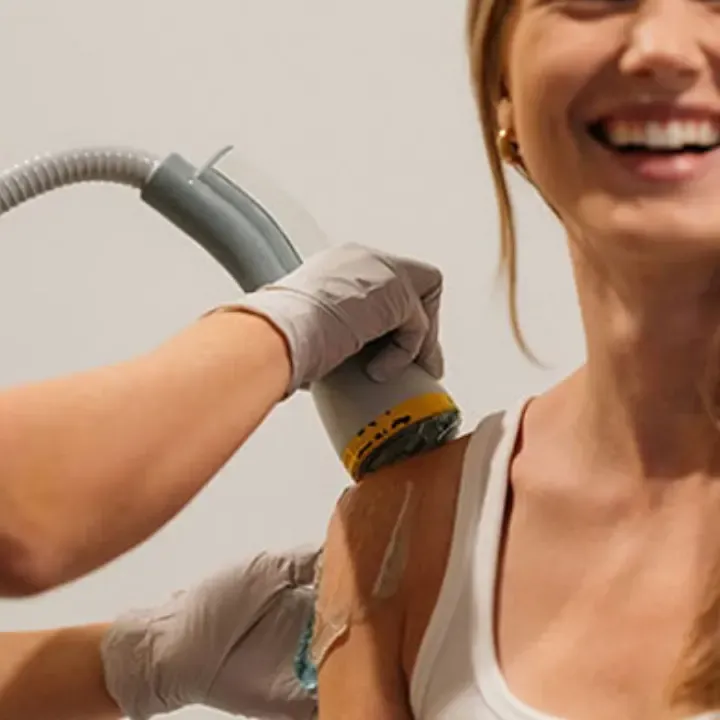
SoftWave therapy for pain relief works by delivering unfocused acoustic shockwaves deep into damaged tissue, triggering your body's own stem cells and growth factors to repair injuries at the cellular level — without surgery, needles, or downtime. It's FDA-cleared, backed by a growing body of research, and it's one of the reasons elite athletes and everyday patients alike are turning to it before considering more invasive options.
Despite being one of the most advanced regenerative technologies available today, SoftWave remains something most people have never heard of — largely because most clinics don't have it. At Atlas Injury to Health, it's one of our three flagship treatments, and it's time we explained why.
Key Takeaways
- SoftWave uses unfocused shockwave technology to stimulate stem cell activity, angiogenesis (new blood vessel formation), and natural tissue regeneration.
- It's FDA-cleared and has gained credibility through its use by professional sports performance coaches, including Tom Shaw, who has trained NFL Combine athletes.
- Unlike focused shockwave devices, SoftWave's unfocused wave pattern treats a broader area of tissue with deeper penetration and no need for pinpoint targeting.
- It offers a non-surgical, drug-free alternative for chronic pain conditions that haven't responded to rest, medication, or physical therapy.
- Treatment sessions are quick (10–20 minutes), require no downtime, and are used alongside chiropractic care for compounding benefits.
What Is SoftWave Therapy, Exactly?
SoftWave therapy is a form of extracorporeal shockwave therapy (ESWT) that uses electrohydraulic technology to generate unfocused acoustic pressure waves. These waves travel through the skin and into deeper tissue layers — tendons, ligaments, muscle, and bone — without being concentrated at a single focal point.
That "unfocused" design is the key differentiator. Older shockwave devices use focused waves that concentrate energy at a specific depth, requiring precise targeting and often missing tissue just outside that narrow zone. SoftWave's unfocused waves spread energy across a wider treatment area and reach deeper structures, making it effective for a broader range of musculoskeletal issues without requiring pinpoint accuracy from the provider.
The Science Behind Stem Cell Activation
Here's where SoftWave moves beyond simple pain masking and into actual tissue repair. The acoustic waves create controlled microtrauma at the cellular level, which signals your body to respond the way it does after any injury — by mobilizing stem cells, growth factors, and increasing blood flow to the area.
This process, known as mechanotransduction, converts mechanical energy into biochemical cellular signals. The result is:
- Increased angiogenesis — new blood vessel formation that improves circulation and nutrient delivery to damaged tissue
- Stem cell recruitment and activation — encouraging the body's own regenerative cells to migrate to the injury site
- Collagen production — supporting the rebuilding of tendons, ligaments, and connective tissue
- Reduced inflammation over time, as tissue quality improves rather than being temporarily numbed
Organizations like the National Institutes of Health have supported ongoing research into shockwave and regenerative technologies as the medical community continues exploring non-invasive alternatives to pain management. It's important to note that while research is promising, SoftWave and similar therapies work best as part of a broader, provider-guided treatment plan rather than a standalone cure.
Why Athletes and Performance Coaches Trust This Technology
SoftWave's credibility isn't just theoretical — it's been adopted in professional sports performance circles. Tom Shaw, a well-known strength and conditioning coach who has trained numerous NFL Combine prospects and professional athletes, has been associated with SoftWave technology as part of athlete recovery and performance protocols.
When elite athletes — whose careers depend on fast, effective recovery from soft tissue injuries — turn to a specific regenerative technology, it says something about its real-world effectiveness. These athletes don't have the luxury of long recovery timelines or treatments that only mask symptoms. They need tissue to actually heal, and quickly.
That same principle applies to patients at Atlas, whether you're dealing with a sports injury, chronic joint pain, or an old injury that never fully resolved.
SoftWave vs. Conventional Pain Management: What's the Difference?
Most conventional approaches to musculoskeletal pain fall into a few categories, each with real limitations:
- Oral pain medication (NSAIDs, opioids) — manages symptoms temporarily but does nothing to repair underlying tissue damage, and carries risks with long-term use.
- Corticosteroid injections — can reduce inflammation short-term but repeated use has been linked to tissue weakening over time.
- Physical therapy alone — valuable for mobility and strength, but may not be enough when tissue itself is damaged or degenerated.
- Surgery — often effective but comes with downtime, recovery risk, cost, and is typically considered a last resort.
SoftWave therapy for pain relief fits into the treatment landscape as a non-invasive option that addresses the root tissue damage rather than just the symptoms. It doesn't replace surgery in every case, but for many patients with chronic tendinopathies, plantar fasciitis, joint pain, and soft tissue injuries, it offers a legitimate alternative worth trying before more invasive procedures.
The Mayo Clinic and other major health institutions have long emphasized a stepped approach to musculoskeletal pain — starting with the least invasive, lowest-risk options first. SoftWave fits squarely into that philosophy.
Common Conditions That May Respond Well to SoftWave
Patients at Atlas often explore SoftWave therapy alongside chiropractic care for conditions such as:
- Chronic low back pain that hasn't responded to rest or medication
- Sciatica and nerve-related pain stemming from soft tissue involvement
- Arthritis-related joint stiffness and discomfort (arthritis)
- Lingering pain from a car accident or whiplash injury
- Tendon and ligament injuries that haven't fully healed with rest alone
Because SoftWave targets tissue regeneration rather than just symptom relief, it often works best as part of a comprehensive plan that may include chiropractic care, postural correction, and other complementary services.
What to Expect During a SoftWave Treatment Session
If you're considering SoftWave therapy for pain relief, here's what a typical visit looks like:
- Duration: Sessions typically last 10–20 minutes depending on the treatment area.
- Sensation: Patients often describe a tapping or pulsing sensation; some mild discomfort is normal, especially over more sensitive areas.
- Downtime: None required — most patients return to normal activity immediately.
- Frequency: A series of sessions (often weekly) is generally recommended, since regeneration is a gradual biological process, not an instant fix.
- Combination care: Many providers pair SoftWave with chiropractic adjustments or other modalities for compounding benefit.
Your provider will evaluate your specific condition, health history, and imaging (if needed, via X-rays) to determine whether SoftWave is appropriate and how many sessions you may need.
Is SoftWave Therapy Right for You?
SoftWave isn't a magic cure-all, and any reputable provider should be transparent about that. It works best for musculoskeletal conditions involving soft tissue, tendons, and joints — and it's not appropriate for everyone, including certain pregnant patients, those with active infections at the treatment site, or specific bleeding disorders.
The best way to know if it's right for your situation is a proper evaluation with a provider who understands both the technology and your individual health history. This is exactly the kind of evidence-informed, personalized approach organizations like the American Chiropractic Association advocate for — matching the right treatment to the right patient rather than a one-size-fits-all protocol.
Frequently Asked Questions
Is SoftWave therapy painful?
Most patients describe a tapping or mild pulsing sensation rather than sharp pain. Some areas with more nerve sensitivity, like the plantar fascia, may cause brief discomfort during treatment, but it typically subsides quickly afterward.
How many SoftWave sessions will I need?
This varies by condition and severity, but many treatment plans involve a series of weekly sessions over several weeks. Tissue regeneration is a biological process that takes time, so patience and consistency matter for best results.
Is SoftWave therapy FDA-cleared?
Yes, SoftWave technology has received FDA clearance for use in treating various musculoskeletal conditions. That said, clearance relates to safety and device function — your provider will still determine if it's the appropriate treatment for your specific diagnosis.
Can SoftWave therapy help me avoid surgery?
For some patients with chronic soft tissue injuries, SoftWave may reduce or eliminate the need for surgical intervention by promoting natural tissue repair. However, this depends on the severity and nature of your condition, and a qualified provider should evaluate whether it's a suitable alternative in your case.
Does SoftWave therapy work for chronic pain that hasn't responded to other treatments?
Many patients turn to SoftWave specifically because other approaches — medication, injections, physical therapy — haven't provided lasting relief. Because it targets the underlying tissue rather than just symptoms, it offers a different mechanism of action that may help when other treatments have plateaued.
Ready to Explore SoftWave Therapy for Yourself?
If chronic pain has kept you sidelined from the activities and life you love, SoftWave therapy may be the missing piece in your recovery plan. At Atlas Injury to Health, our Winter Garden and Ocala teams combine SoftWave with expert chiropractic care to address the root cause of your pain, not just the symptoms.
Schedule a consultation today to find out if SoftWave therapy for pain relief is the right next step on your healing journey.
Ready to take the next step?
Schedule a consultation to see how Atlas can help you.
Schedule a Consultation