
Migraine Relief in Winter Garden: Targeting the Root Cause
Written & medically reviewed by Dr. Michael St. Louis, D.C.
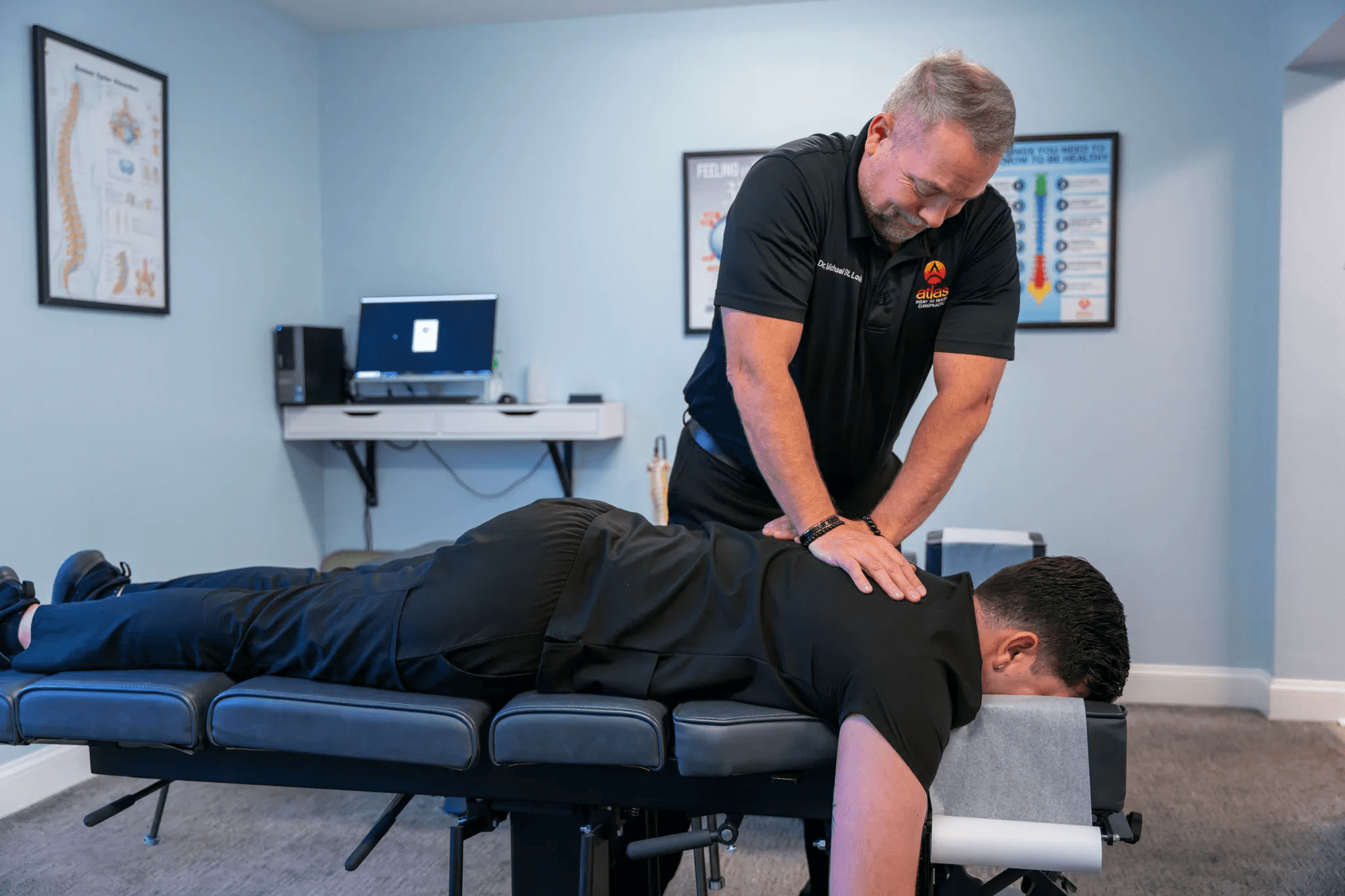
Migraine relief in Winter Garden starts with identifying why migraines happen in the first place — and for many patients, a misaligned atlas (C1) vertebra at the top of the neck is a hidden driver that standard treatments overlook. Atlas Orthogonal, a precise, low-force chiropractic technique, corrects this misalignment to restore normal brainstem blood flow and nerve signaling, often reducing migraine frequency and intensity without medication.
If you're a busy professional or parent in Winter Garden, Horizon West, or the greater west Orlando suburbs juggling long commutes, screen-heavy workdays, and the everyday stress of raising a family, you already know how disruptive migraines can be. This post explains exactly how Atlas Orthogonal works, why it's different from general chiropractic adjustments, and what you can expect from care at Atlas Injury to Health.
Key Takeaways
- Migraines are frequently linked to upper cervical spine misalignment, particularly at the atlas (C1) vertebra, which can affect brainstem function and blood flow.
- Atlas Orthogonal is a gentle, precision-based technique that realigns C1 without twisting or "cracking" the neck.
- Stress, poor posture, and prolonged screen time — common among Winter Garden's commuting professionals and parents — are known migraine triggers that upper cervical misalignment can worsen.
- Correcting atlas misalignment may reduce nerve irritation and improve blood flow to the brainstem, addressing a root cause rather than just masking symptoms.
- Atlas Injury to Health brings performance-level, NFL-referred care standards to migraine sufferers in Winter Garden.
Why Winter Garden Residents Are Especially Prone to Migraine Triggers
West Orlando's growth has brought incredible convenience and quality of life, but it's also brought longer commutes on the 429 and Highway 50, demanding professional schedules, and the constant screen exposure that comes with remote work, video calls, and kids' virtual schooling. These lifestyle factors are among the most common migraine triggers recognized by health authorities like the Mayo Clinic.
Add in the physical strain of hunching over a laptop or looking down at a phone for hours, and you have a recipe for forward head posture — a postural pattern that places significant stress on the upper cervical spine. Over time, this can contribute to misalignment of the atlas vertebra, the small bone at the very top of your neck that supports the full weight of your head.
For many patients we see at our Winter Garden location, migraines aren't a random occurrence — they're a physiological response to accumulated tension and misalignment in this critical area.
The Atlas-Migraine Connection: What's Actually Happening
The atlas (C1) vertebra sits directly beneath the skull and surrounds the brainstem, an area packed with nerve pathways and blood vessels responsible for regulating pain signals, blood flow, and communication between the brain and the rest of the body. Even a slight misalignment of the atlas — often just a few millimeters — can:
- Irritate the upper cervical nerves that share pathways with the trigeminal nerve, a major player in migraine and headache pain
- Restrict normal blood flow through the vertebral arteries, which pass through the cervical vertebrae on their way to the brainstem and brain
- Create chronic muscular tension in the neck and skull base, a well-documented migraine and tension headache trigger
Organizations like the American Chiropractic Association and the National Institutes of Health recognize the growing body of research connecting cervical spine health to headache and migraine presentation, though experts agree migraines are multifactorial and no single treatment works for everyone.
This is precisely why an upper cervical approach like Atlas Orthogonal can be so effective for the right patients — it targets a specific, measurable structural cause rather than only managing symptoms after they start.
How Atlas Orthogonal Works: A Precision Approach to Migraine Relief
Atlas Orthogonal is a specialized upper cervical technique that differs significantly from general chiropractic adjustments. Instead of manual twisting or high-velocity thrusts, it uses:
- Precision digital imaging and X-rays to measure the exact degree and direction of atlas misalignment
- A handheld, low-force instrument that delivers a gentle, calculated pulse to nudge the atlas back toward proper alignment
- No rotation or "cracking" of the neck, making it a comfortable option even for patients who are apprehensive about traditional adjustments
Because the correction is so precise, even a small adjustment can produce a meaningful shift in how the head and neck sit atop the spine — which can translate into reduced pressure on the brainstem, improved vertebral artery blood flow, and calmer nerve signaling.
At Atlas Injury to Health, this technique is central to how we approach migraine treatment. Many of our providers have experience working with high-performance athletes, including NFL-level care standards, which means the same precision and attention to biomechanical detail used for elite performance recovery is applied to every patient walking through our doors.
What to Expect During Your First Visit
Your first visit typically includes:
- A detailed health history focused on migraine frequency, triggers, and patterns
- Postural and structural assessment of the neck and upper spine
- Precision X-rays (learn more about our X-ray process) to identify the exact atlas misalignment
- A personalized care plan combining Atlas Orthogonal adjustments with lifestyle guidance
Beyond the Adjustment: Managing Stress and Screen-Time Triggers
While atlas alignment addresses a structural root cause, we also work with Winter Garden patients on practical strategies to reduce the everyday triggers so common in this community:
- Screen breaks: The 20-20-20 rule (every 20 minutes, look at something 20 feet away for 20 seconds) reduces eye strain and neck tension.
- Ergonomic setup: Raising your monitor to eye level prevents the forward head posture that stresses the upper cervical spine.
- Stress management: Simple breathing exercises or short walks between meetings can lower the cortisol spikes linked to stress-triggered migraines.
- Hydration and sleep consistency: Both are frequently cited by MedlinePlus as foundational migraine prevention habits.
These small daily adjustments, paired with upper cervical care, often produce the most sustainable results.
Is Atlas Orthogonal Right for Your Migraines?
Not every migraine has the same root cause, and we believe in honest, evidence-informed guidance rather than one-size-fits-all promises. Atlas Orthogonal tends to be a strong fit for patients whose migraines are associated with:
- Neck pain, stiffness, or tension alongside headaches
- A history of whiplash, car accident injury, or concussion
- Poor posture from desk work or screen time
- Migraines that worsen with certain head or neck movements
If your migraines fit this pattern, a structural evaluation of your upper cervical spine may reveal a contributing factor that's been missed by previous treatment approaches. Our team can also assess for related issues like tension and posture-driven headaches that often overlap with migraine presentations.
Frequently Asked Questions
How is Atlas Orthogonal different from a regular chiropractic adjustment?
Atlas Orthogonal uses precision digital X-rays to calculate the exact angle of atlas misalignment, then applies a gentle, low-force instrument adjustment rather than manual twisting or rotation. It's a highly targeted, research-driven approach focused specifically on the C1 vertebra.
How many visits does it typically take to see migraine relief?
This varies by patient depending on the degree of misalignment, migraine history, and how consistently the atlas holds its corrected position. Many patients notice initial changes within the first several visits, though a full care plan is personalized based on your evaluation.
Is Atlas Orthogonal safe for someone who has never had chiropractic care before?
Yes. Because it's a gentle, low-force technique without rotation or high-velocity thrusts, it's often well-suited for patients who are new to chiropractic care or apprehensive about traditional adjustments. Your provider will walk you through the assessment and adjustment process before beginning care.
Can stress and screen time really cause migraines, or is it just neck pain?
Stress and prolonged screen time are well-documented migraine triggers recognized by major health organizations, and they frequently contribute to the forward head posture and upper cervical tension that can aggravate or trigger migraine episodes. Addressing both the structural and lifestyle factors together tends to produce the best outcomes.
Do I need a referral to be evaluated for migraines at Atlas Injury to Health?
No referral is needed. You can schedule a consultation directly at our Winter Garden location, where our team will conduct a thorough evaluation to determine whether upper cervical misalignment is contributing to your migraines.
Take the Next Step Toward Lasting Migraine Relief
If migraines are disrupting your work, your family time, or your quality of life, you don't have to keep cycling through temporary fixes. Atlas Orthogonal offers a research-informed, precision approach designed to address a genuine structural root cause — not just mask the pain.
Schedule a consultation with Atlas Injury to Health in Winter Garden today, and let our experienced team help you find real, lasting migraine relief.
Ready to take the next step?
Schedule a consultation to see how Atlas can help you.
Schedule a Consultation