
Cervicogenic Headache: Signs, Causes, and When the Neck Is Involved
Written & medically reviewed by Dr. Michael St. Louis, D.C.
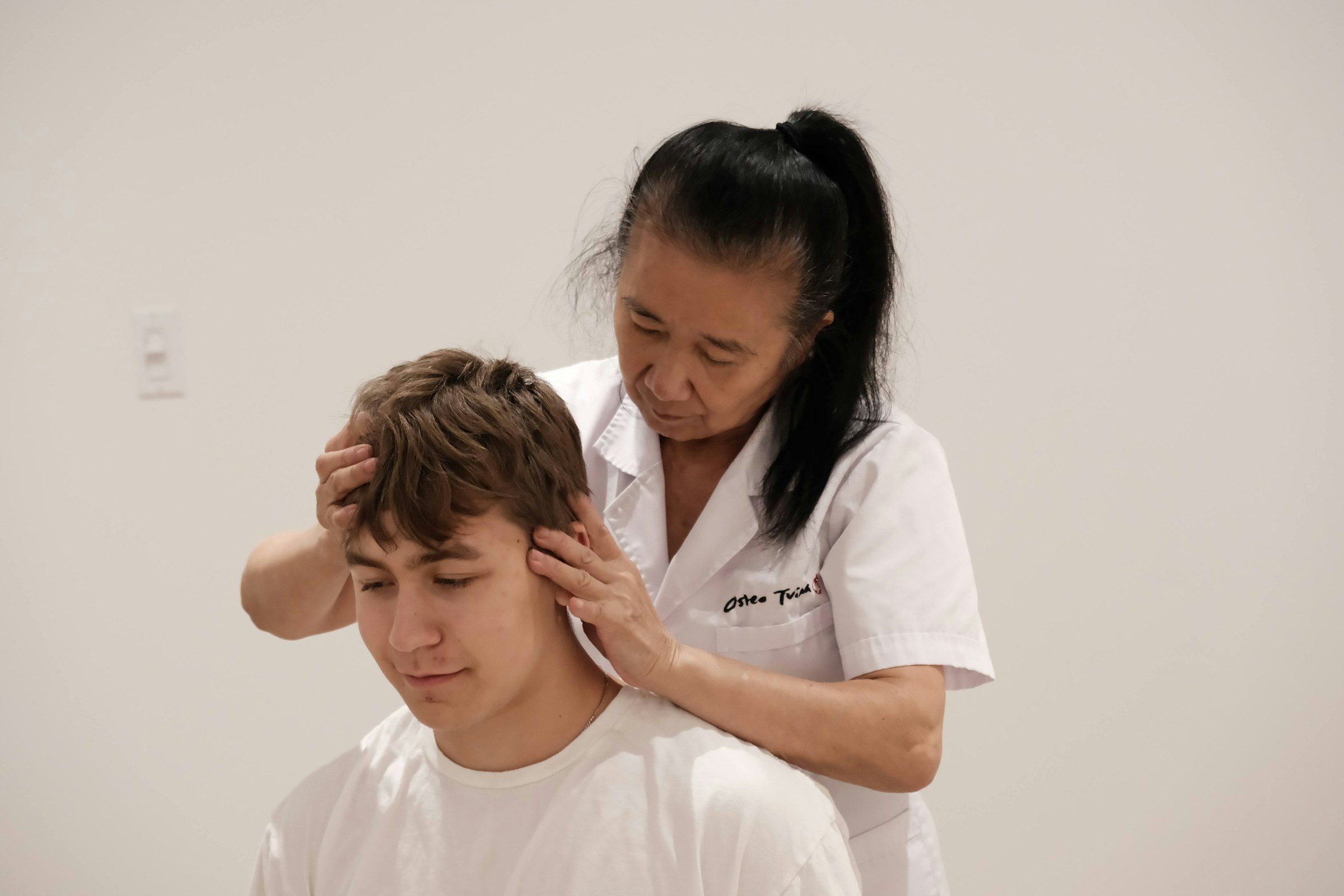
A cervicogenic headache is head pain that is thought to originate in the neck, usually the upper cervical spine and the soft tissue around it, rather than in the brain itself. It often shows up on one side, may begin at the base of the skull, and can be brought on by certain neck movements or sustained postures. If that sounds familiar, there are clear ways to sort out what you're dealing with, and a thoughtful evaluation is the place to start.
We understand how persistent one-sided head and neck pain can feel. It can follow you from your desk to the car to the dinner table, and it's hard to explain to the people around you. This guide walks through the signs, how this type of headache differs from migraine and tension-type headache, what an evaluation looks for, and how our clinical team approaches care at Atlas Injury to Health.
Key Takeaways
- A cervicogenic headache is classified as a secondary headache, meaning the pain is attributed to a source in the neck rather than being a primary headache condition like migraine.
- Common features include one-sided pain, a stiff or less mobile neck, and pain that starts in the neck and spreads toward the forehead, temple, or behind the eye.
- Upper cervical practitioners hold that the top two vertebrae and surrounding soft tissue may contribute to head pain. That is a clinical rationale, not settled science.
- Sudden severe headache, fever with a stiff neck, neurological changes, or a headache after an injury need urgent medical care first.
- Care at our precision wellness center is meant to complement, not replace, a medical evaluation.
What a Cervicogenic Headache Feels Like
People describe this kind of headache in fairly consistent ways, though no two experiences are identical. The pattern tends to include:
- Mostly one-sided pain that stays on the same side, or occasionally alternates
- Pain that begins in the neck or back of the head and travels forward toward the temple, forehead, or around the eye
- Reduced neck motion, or a sense that turning your head in one direction is limited or uncomfortable
- Triggers tied to position or movement, such as long stretches at a computer, looking down at a phone, or sleeping in an awkward position
- A dull, steady ache more often than a throbbing one, though intensity varies
- Tenderness when pressure is applied to the upper neck or base of the skull
Some people also notice shoulder tightness, or a feeling of pressure behind one eye. Others describe blurry vision or fatigue alongside the head and neck discomfort. These overlap with other headache types, which is exactly why a careful evaluation matters.
How a Cervicogenic Headache Differs From Migraine and Tension-Type Headache
Headaches can look alike from the outside, and many people have more than one type. Here is a general way to tell them apart. This is educational only, and only a qualified provider can tell you which one you have.
Cervicogenic headache vs. migraine
Migraine is a primary headache condition. It commonly involves throbbing or pulsing pain, sensitivity to light and sound, nausea, and sometimes an aura, such as visual changes before the pain begins. Attacks often come in episodes that can last hours to days.
A cervicogenic headache is more likely to be linked to neck movement or posture, to come with a noticeably stiff or restricted neck, and to start from the neck rather than building behind the eyes. Nausea and strong light sensitivity are less typical, although they can appear in both. Because the two can coexist, it isn't always either/or.
Cervicogenic headache vs. tension-type headache
Tension-type headache is the most common headache type. It usually feels like a band or pressure on both sides of the head, often with tight muscles in the neck and shoulders. The pain tends to be mild to moderate and doesn't usually get worse with routine activity.
A cervicogenic headache is more often one-sided and more closely tied to specific neck positions or movements. That said, neck and shoulder muscle tension shows up in many headache types, so the lines can blur. Our overview of headaches covers the broader picture.
Why the distinction matters
Knowing which pattern fits you helps you and your providers choose where to look. If your head pain behaves like a migraine, a medical provider should lead. If your pain tracks closely with how your neck moves and feels, it makes sense to evaluate the neck as well.
What May Contribute to Neck-Related Head Pain
The upper neck has a dense network of joints, muscles, ligaments, and nerves. Nerves from the top few levels of the cervical spine share pathways in the nervous system with those that carry sensation from the head and face. This overlap is one reason pain from the neck can be felt in the head.
Several factors are commonly discussed as possible contributors:
- Prolonged posture. Hours at a desk, on a phone, or editing at a screen can load the upper neck and the muscles at the base of the skull.
- Past injuries. Whiplash from a car accident, a fall, or a sports collision can affect the neck. Our page on whiplash explains more about how these injuries are evaluated.
- Joint stiffness or irritation in the upper cervical spine.
- Muscle tension and trigger points in the neck, shoulders, and suboccipital region.
- Age-related changes in the cervical spine, such as arthritis.
Upper cervical practitioners hold that the top two vertebrae, the atlas (C1) and axis (C2), and the surrounding soft tissue may contribute to head pain when they are not moving or positioned well. That is the clinical rationale behind upper cervical care. It is a perspective that guides how we evaluate and care for patients, not a claim that science has settled the question for every person or every headache.
What an Evaluation Looks For
A good evaluation should leave you understanding what is going on, not just handing you a label. At our clinics, the first visit is a paid new patient visit that includes a consultation, an exam, and advanced diagnostics. Here is what that process generally involves.
Your history
We'll ask when the headaches started, which side they affect, what makes them better or worse, and whether you've had any neck injuries, falls, or accidents. We also want to know what you've already been told by other providers and what tests you've had.
A physical and movement exam
Your clinician will look at how your neck moves, where it feels restricted or tender, how you hold your posture, and whether certain positions reproduce your head pain. Reproducing the headache with specific neck movements or pressure is one of the features commonly used to identify a neck-related contribution.
Advanced diagnostics
For upper cervical care, precise information matters. Digital imaging helps our clinical team see the alignment and curvature of your cervical spine and the relationship between the skull and the top vertebrae. That information guides whether upper cervical care is appropriate for you and, if so, how it is tailored. This is care built around your own evaluation, so your findings, not a template, shape your path.
Screening for what shouldn't wait
Part of a responsible evaluation is recognizing when your symptoms point somewhere else. If anything in your history or exam suggests another cause that needs medical attention, we'll say so and help you get to the right provider.
Red Flags: When to Seek Urgent Medical Care First
Most headaches are not emergencies, but some are. Please seek urgent or emergency care, rather than scheduling a chiropractic visit, if you experience:
- A sudden, severe headache that comes on abruptly, sometimes described as the worst headache of your life
- Fever with a stiff neck, especially with confusion, rash, or sensitivity to light
- Neurological changes, such as weakness, numbness, trouble speaking, vision loss, confusion, loss of balance, or facial drooping
- A headache after a head or neck injury, including a car accident, fall, or sports impact
- A new headache pattern if you are older, pregnant, or have a condition affecting your immune system
- A headache with seizures, fainting, or persistent vomiting
Organizations like the Mayo Clinic and MedlinePlus offer plain-language guidance on headache warning signs, and the National Institutes of Health provides general information on headache disorders. If you are unsure whether your symptoms are urgent, it is always reasonable to call your primary care provider or seek emergency care.
How Care Complements Your Medical Evaluation
Chiropractic and upper cervical care is not a substitute for medical diagnosis. If your headaches are new, changing, or worsening, we encourage you to see your medical provider. Many patients explore care at our clinics alongside what their physicians recommend, and our clinical team is glad to coordinate when that is helpful.
Think of it as adding another lens. A medical evaluation rules out conditions that need medical management. An upper cervical evaluation looks specifically at how your neck and upper spine may be contributing to what you feel.
How Atlas Orthogonal Approaches the Upper Cervical Spine
Atlas Orthogonal is an upper cervical technique focused on the atlas, the top vertebra that supports the skull. It is delivered with an instrument and guided by your advanced diagnostics, so there is no twisting, and no cracking or popping of the neck.
The approach is aimed at upper cervical alignment, and each session is based on your own measurements and imaging. Practitioners of this technique hold that improving the position and motion of the upper neck may reduce strain on surrounding tissue and nerves. As with any approach, how you respond is individual, and no one can promise a particular result.
Your care journey is also personal in pacing. Our clinical team walks you through your findings, explains each step, and gives you room to ask questions before you decide anything.
Supporting Soft Tissue and Posture
The bones are only part of the picture. Muscles, fascia, and ligaments in the neck and shoulders can be sore, tight, or irritated, and that is often part of what you feel.
- SoftWave. SoftWave Tissue Regeneration Therapy is a non-invasive therapy used on soft tissue areas. The device is FDA cleared, and it may be considered as part of care for tight or irritated tissue in the neck and shoulders when your evaluation suggests it makes sense.
- Therapeutic exercise. Targeted movements for the neck, upper back, and shoulders can support better posture and help you carry the gains from in-office care into daily life. Your exercises are chosen based on how you move.
- Everyday habits. Small changes, such as raising your screen to eye level, taking movement breaks, and adjusting your pillow, can reduce how much your upper neck is loaded across the day.
Our neck pain page covers additional ways we look at neck-related discomfort.
Questions to Ask Before You Begin Care
Whoever you choose, a few questions help you feel confident:
- What does your evaluation include, and how will you explain the findings?
- How will you know whether my headache pattern fits a neck-related source?
- What will my care journey look like, and how will you track progress?
- How will you coordinate with my medical provider?
- What are the signs that I should be seen urgently instead?
Frequently Asked Questions
What does a cervicogenic headache feel like?
It typically feels like a one-sided, steady ache that starts in the neck or back of the head and moves toward the forehead, temple, or behind the eye. Many people also notice neck stiffness, reduced range of motion, and pain that flares with certain positions or movements. Because other headaches can feel similar, a qualified provider should confirm what you're experiencing.
How is it different from a migraine?
Migraine is a primary headache condition that often involves throbbing pain, nausea, and sensitivity to light and sound, sometimes with an aura. A cervicogenic headache is attributed to a neck source and tends to be tied to neck movement, posture, and restricted neck motion. The two can occur together, so evaluation is the best way to sort out your pattern.
Can posture and desk work contribute to neck-related headaches?
Prolonged postures, such as looking down at a phone or sitting at a computer for hours, load the muscles and joints of the upper neck. Many practitioners consider this a possible contributor to neck-related head pain. It doesn't mean posture is the only factor, which is why an individual evaluation matters.
What happens at a first visit for headaches at Atlas?
Your first visit is a paid new patient visit that includes a consultation, exam, and advanced diagnostics. Our clinical team reviews your history, assesses how your neck moves, and uses imaging to guide whether upper cervical care is appropriate for you. You'll have time to ask questions before deciding on next steps.
When should I go to the emergency room instead?
Seek urgent care for a sudden severe headache, fever with a stiff neck, new neurological symptoms such as weakness, numbness, vision loss, or trouble speaking, or any headache following a head or neck injury. If you are ever unsure, it is safest to get medical attention first.
Take the Next Step Toward Understanding Your Headaches
Head pain that seems to travel with your neck deserves a careful look. You don't have to sort it out alone, and understanding your pattern is a meaningful first step. Our clinical team will listen to your story, look closely at your upper cervical spine with advanced diagnostics, and explain what we find in plain language.
Ready to explore your options? Schedule a consultation at our Winter Garden clinic or our Ocala clinic, whichever is closer to you, and we'll help you take the next step on your care journey.
Ready to take the next step?
Schedule a consultation to see how Atlas can help you.
Schedule a Consultation