Car Accident Chiropractor in Winter Garden: The First 14 Days
Written & medically reviewed by Dr. Michael St. Louis, D.C.
If you've been in a collision near Winter Garden, the right time to see a car accident chiropractor is within the first few days, and under Florida's PIP rule you generally need to begin care within 14 days of the crash to use those benefits. Even if you feel "mostly okay," an evaluation can help you understand what your body went through and explore your options while the timeline is still on your side.
Key Takeaways
- Go to the ER first if you have red-flag symptoms such as loss of consciousness, confusion, severe headache, numbness or weakness, chest or abdominal pain, or trouble breathing.
- Delayed symptoms are common. Stiffness, headaches and dizziness can appear hours or days after a collision, so a normal-feeling first day doesn't rule out an injury.
- Florida's 14-day PIP window matters. Generally, initial care needs to begin within 14 days of the accident for PIP benefits to apply. Confirm the details of your own policy with your carrier.
- Your first visit is a full evaluation: history, exam, and advanced diagnostics, including digital imaging of the upper neck when appropriate.
- Care is gentle and individualized. Atlas Orthogonal uses an instrument with no twisting or popping, and SoftWave Therapy is used for soft-tissue recovery. Neither promises a particular result for any one person.
Where You Are Right Now: The Days After a Collision
The days after a crash can feel strange. The adrenaline fades, the paperwork begins, and your body starts to tell you things you didn't notice at the scene. You may be sorting out car repairs, calls with an insurance adjuster, and work or school schedules, all while your neck feels tight and your head feels "off."
That's a very human place to be, and it doesn't have to stay unclear. A structured first two weeks (medical screening, a thorough evaluation, and a thoughtful care journey) can give you answers and a direction. Here is how that path typically looks.
Why Symptoms Often Show Up Days Later
Many people walk away from a collision feeling shaken but fine. Then, a day or three later, they wake up with a stiff neck, a headache behind the eyes, or a low back that won't loosen up. This delayed pattern is common, and there are a few reasons it may happen.
- Adrenaline masks discomfort. Your body's stress response can dampen pain signals in the first hours.
- Inflammation builds over time. Strained muscles, ligaments and other soft tissues can swell and tighten gradually rather than all at once.
- Your head moves quickly, even in low-speed impacts. The head is heavy relative to the neck, and a sudden stop-and-go motion can strain the tissues of the neck and upper back. This is the mechanism people usually mean by whiplash, which we cover in more depth on our whiplash condition page.
- Symptoms can look unrelated. Headaches, dizziness, jaw soreness, fatigue, trouble concentrating, and tingling in the arms or hands can all follow a collision. They deserve evaluation rather than guessing.
Resources such as Mayo Clinic describe whiplash symptoms as often developing within 24 hours of the injury, which is one more reason not to wait for pain to become severe before getting checked.
When to Go to the ER First
A chiropractic evaluation is not a substitute for emergency care. If any of the following apply, go to the nearest emergency department or call 911 before you do anything else:
- Loss of consciousness, even briefly, or confusion and memory gaps
- A severe or worsening headache, repeated vomiting, or seizures
- Numbness, tingling or weakness in your arms or legs, or trouble walking
- Severe neck pain after a high-speed impact, or pain with any loss of movement
- Chest pain, shortness of breath, or abdominal pain or swelling
- Visible deformity, heavy bleeding, or suspected broken bones
MedlinePlus offers plain-language guidance on head injuries and when to seek emergency help. When in doubt, get checked medically first. Once you've been cleared, or if your symptoms are milder, a car accident chiropractor can help with the next step: understanding how the collision affected your spine and soft tissues.
Why See a Car Accident Chiropractor Within 14 Days
Timing matters for two reasons: your recovery and your coverage.
Florida's 14-day PIP rule, in plain language
Florida is a no-fault state. Most drivers carry Personal Injury Protection (PIP), which is designed to help with medical expenses after a crash regardless of who caused it. As a general rule, to use PIP for your injuries you need to receive initial medical services and care within 14 days of the accident. Waiting past that window can put those benefits at risk.
A few practical notes:
- PIP rules, coverage limits and requirements can vary with your policy and circumstances, so confirm specifics with your insurance carrier or an attorney.
- Our clinic is out of network with health insurance and does not bill health insurance for payment. Florida PIP after an auto accident is the one exception, and our clinical team can walk you through how it applies to your situation.
- Keep your accident report number, your claim number, and any records from the ER or urgent care. They make the process smoother.
If you want a general overview of Florida crash reporting and driver responsibilities, the Florida Highway Safety and Motor Vehicles site is a good starting reference.
Our car accident condition page outlines how we approach post-collision care in more detail.
What Your First Visit Looks Like
Your first visit is a paid new patient visit, built around understanding you, not rushing you. Here is what to expect.
- A conversation about your history. We'll ask about the collision itself (speed, direction of impact, where you were sitting, whether your head turned), your symptoms so far, and any past injuries or conditions. Details like these help guide what we look for.
- A hands-on exam. This typically includes posture, range of motion, muscle tension, joint movement, and neurological checks such as reflexes and sensation.
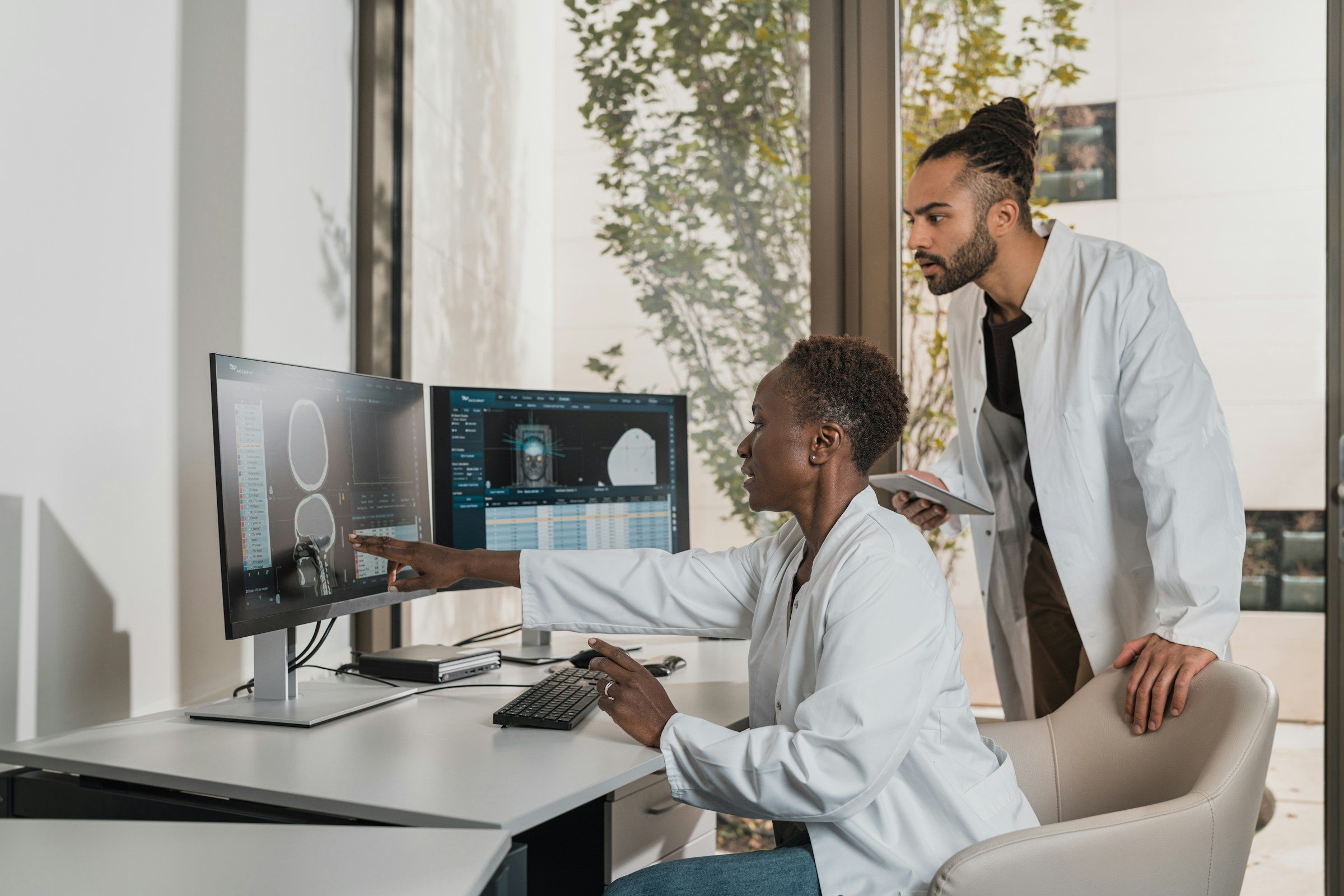
- Advanced diagnostics. When appropriate, we use digital imaging, including imaging of the upper neck, to see how the area is positioned and to inform your care. These findings, together with your exam, help us decide whether care here is a good fit and whether anything needs to be referred out.
- A clear explanation. You'll hear what we found, what we recommend, and what to expect, in language that makes sense rather than jargon.
Our clinical team may also recommend that you see your medical doctor or another specialist, or coordinate with them, depending on what we find. That might include an MRI referral, a primary care visit, or an orthopedic or neurological consult. Your care should work as a team effort.
A patient named J. Simmes, who began care at Atlas after an accident, shared this in a verified review:
"I've been visiting Atlas since the end of September when I was involved in an accident. They have been attentive to my needs, very flexible with my schedule. Dr. Pat has been awesome. And overall, I feel as though they understand my time crunch is, my schedule, and the right treatment for my issues."
Gentle, Instrument-Based Atlas Orthogonal Care
After a collision, many people feel understandably cautious about anyone touching their neck. That's reasonable. Atlas Orthogonal care is designed with that in mind: it uses a precise, hand-held instrument rather than twisting, cranking or popping. Most people stay seated or lying comfortably while it's delivered.
Here's the clinical rationale. The atlas is the top vertebra in your neck, sitting just beneath the skull. Upper cervical practitioners hold that when this area is out of its ideal position, it may affect how the neck, head and surrounding tissues function, and that a gentle, measured correction may help the body move and recover more comfortably. Imaging and exam findings are used to determine whether and how to apply the technique to you. This is a clinical approach, not a settled scientific conclusion, and individual responses vary.
Dr. Michael St. Louis trained directly under Dr. Roy Sweat, the creator of the Atlas Orthogonal technique. You can read more on our Atlas Orthogonal page, or learn how it fits within our broader upper cervical care approach.
SoftWave Therapy for Soft-Tissue Recovery
Not every post-crash symptom comes from the spine. Muscles, tendons and ligaments in the neck, shoulders and back are often strained as well. This is where SoftWave Therapy may come in.
SoftWave Tissue Regeneration Therapy delivers acoustic (sound) waves to the targeted area through a handheld applicator. The clinical rationale is that these waves may stimulate circulation and encourage the body's natural tissue-repair processes in irritated or injured soft tissue. The device is FDA-cleared. It is not a cure, and it doesn't promise a particular outcome. Whether it makes sense for you depends on what your evaluation shows.
Other supportive options in a care journey may include chiropractic adjustments, massage and soft tissue work, therapeutic exercise, and nutritional support. Which ones, and in what order, depends entirely on you.
Your Care Journey, Coordinated With Your Other Providers
Recovery after a collision is rarely a straight line. A good care journey is:
- Built around your own evaluation, not a fixed template.
- Paced to your life. Work, school, and family schedules are real. We'll talk through frequency and timing together.
- Re-evaluated along the way. We reassess your movement, symptoms and goals, then adjust.
- Coordinated. If you're also seeing your primary care doctor, an orthopedist, a neurologist, or an attorney, we're glad to share records, with your permission, so everyone is working from the same picture.
- Honest about limits. If something is outside what we do, we'll say so and point you toward the right provider.
Finding a Car Accident Chiropractor Close to Home in West Orange County
Winter Garden sits at a busy crossroads. Daily life here often means SR 50 traffic, merges near the Florida's Turnpike interchange, school-run congestion, and commutes toward Orlando or out to Clermont and Ocoee. Those are exactly the stop-and-go conditions where rear-end and side-impact collisions happen, often at speeds that seem minor but still jolt the body.
For many people in West Orange, the goal after a crash is simple: get back to normal life. That might mean getting through a workday at a desk without a tension headache, keeping up with kids, or returning to a rec league or a gym routine. Care that is close to home and flexible about your schedule can make it much easier to start within that 14-day window and to follow through.
You can find our address, hours and directions on our Winter Garden location page.
A Simple Checklist for the First 14 Days
- Day 0–1: Get medical attention if you have any red-flag symptoms. Document the scene, exchange information, and file a report.
- Day 1–3: Notify your insurer. Notice how your neck, back, head and jaw feel, and write down any changes.
- Within the first week: Schedule a consultation for a full evaluation, so you're well inside the PIP window.
- By day 14: Make sure you've received initial care from a qualified provider. Follow up on any referrals.
- Ongoing: Keep notes on symptoms, appointments and missed work. They're helpful for both your care and your claim.
Frequently Asked Questions
Do I need to be evaluated if I feel fine after the crash?
Feeling fine on day one doesn't necessarily mean you're uninjured. Adrenaline and gradual inflammation can hide symptoms for days. An evaluation within the first two weeks gives you a baseline, helps catch issues early, and keeps your PIP timeline intact. If you have any red-flag symptoms, go to the ER first.
What is Florida's 14-day PIP rule?
In general, Florida's PIP coverage requires that you receive initial medical services and care within 14 days of the accident. Coverage amounts and conditions depend on your policy and your situation, so confirm the details with your insurance carrier or an attorney. PIP after an auto accident is the only insurance exception at our clinic; we are otherwise out of network and do not bill health insurance.
Will Atlas Orthogonal care hurt or involve neck twisting?
No. Atlas Orthogonal uses a gentle, instrument-based approach with no twisting, cracking or popping. Many people find it comfortable, but responses vary. Your clinical team will explain each step before starting, and you can ask questions at any point.
How is SoftWave Therapy different from a chiropractic adjustment?
They are aimed at different things. Atlas Orthogonal and chiropractic adjustments focus on the alignment and movement of the spine. SoftWave Therapy uses acoustic waves aimed at irritated soft tissue, based on the rationale that it may support circulation and the body's natural repair processes. Your evaluation helps determine whether either, both or neither is appropriate.
Should I see my medical doctor too?
Often, yes. Seeing your medical doctor is wise after any significant collision, especially if you have head, chest or abdominal symptoms, or numbness or weakness. Our clinical team will coordinate with your doctor or other providers as needed, with your permission.
Take the Next Step Within Your 14-Day Window
You don't have to sort out everything about your recovery alone. If you've been in a collision in Winter Garden or West Orange County, our clinical team can evaluate your spine and soft tissues, explain what we find, and build a care journey around your own evaluation and your schedule. Please schedule a consultation today, and let's start with clear answers.
This article is for general education and isn't a substitute for personal medical advice. If you think you're experiencing a medical emergency, call 911.
Ready to take the next step?
Schedule a consultation to see how Atlas can help you.
Schedule a Consultation